
Chapter 7
Written History
Chapter 7
Written History
MENU
1_HISTORICAL RECORD
2_WRITTEN HISTORY
3_HERODOTUS
4_HECATAEUS
5_THUCYDIDES
6_KHALDUN
7_OTHER
8_Eyewitness Evidence Evaluation
9_Indirect Witness Evidence Evaluation
10_Traditional Oral Evidence
11_MEMORY
1_HISTORICAL RECORD
Prehistory refers to the past where no written records exist, or where the writing of a culture is not understood. It is the span of time before recorded history, ending with the invention of writing systems.
Proto-history refers to the transition period between prehistory and written history, after the advent of literacy, but before the writings of the first historians. Cultures that had not yet developed writing were often referred to in the writings of literate cultures.
Proto-writing More complete writing systems were preceded by proto-writing such as the Jiahu symbols (ca. 6600 BCE), the Vinca signs (ca. 5300 BCE), early Indus script (ca. 3500 BCE).
2_WRITTEN HISTORY
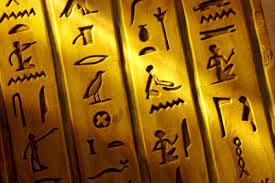
The Sumerian archaic cuneiform script and the Egyptian hieroglyphs are generally considered the earliest writing systems. Both emerged out of their ancestral proto-literate symbol systems from 3400-3200 BCE with earliest coherent texts from 2600 BCE
The earliest chronologies date back to the two earliest civilizations: the ancient Sumerians of Mesopotamia and the early dynasty period of Egypt which emerged independently of each other about 3500 BCE. Earliest recorded history, which varies greatly in quality, details and reliability, deals with Pharaohs and their reigns. In Asia the Han Dynasty appointed a court historian (Sima Qian 145-90 BCE). He is known as the father of Chinese historiography.
3_HERODOTUS
Herodotus (484 – 425 BCE) has generally been proclaimed the ‘father of history’ by composing ‘The Histories’ which was an investigation into the Greco-Persian wars. He was the first historian known to collect his materials systematically, test their accuracy to a certain extent, and arrange them in a well-constructed and vivid narrative. Although some of his stories were fanciful and others inaccurate, he claimed he was reporting only what had been told to him. His record of the achievements of others was an achievement in itself, though the extent of it has been debated. His work is the earliest Greek prose to have survived intact. Halicarnassus, a literary critic of Rome listed seven predecessors of Herodotus, describing their works as simple, unadorned accounts of their own and other cities and peoples, Greek or foreign texts include popular legends, sometimes melodramatic and naïve.
4_HECATAEUS
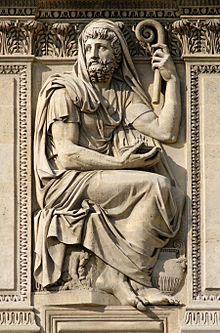
Hecataeus the Milesian speaks thus: I write these things as they seem true to me; for the stories told by the Greeks are various and in my opinion absurd. Hecataeus did not record events that had occurred in living memory, nor did he include the oral traditions of Greek history. Modern scholars have described the work of Hecataeus as a ‘curious and false start to history’ because, despite its critical spirit, it failed to liberate history from myth. Herodotus mocked him for his naïve genealogy, and on one occasion, quoting Athenian complaints against his handling of their national history within the larger framework of civilizations in conflict. Herodotus claims to be better informed than his predecessors, relying on empirical observation to correct their excessive scheming.
His debt to previous authors of ‘prose histories’ might be questionable, but there is no doubt that he owed much to the example and inspiration of poets and story-tellers.
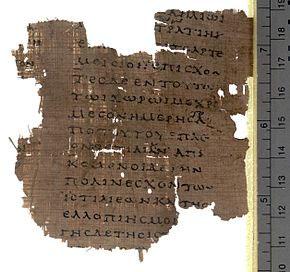
For example, Athenian tragic poets provided him with a world view of a balance between conflicting forces, upset by the hubris (pride that blinds) of kings and they provided his narrative with a model of episodic structure. Fragment from The Histories on papyrus.
5_THUCYDIDES
However his contemporary, the Greek historian Thucydides (460 – 400 BCE) is credited with approaching history with a well-developed historical method. Thucydides regarded history as being the product of the choices and actions of human beings, and looked at cause and effect, rather than as a result of divine intervention.
6_KHALDUN
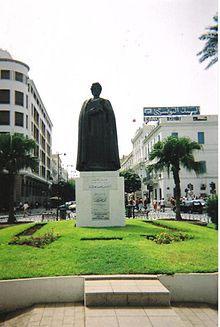
In 1377 the Muslim historian Ibn Khaldun produced the first work dealing with the philosophy of history, cultural history and economics. His ‘Book of lessons, is a record of beginnings and events in the history of the Arabs and Berbers and their powerful contemporaries’, dealt with Islamic theology, political theory and the natural sciences of biology and chemistry. With a thorough criticism of the mistakes regularly committed by his fellow historians and the difficulties which await the historian in his work, he notes seven critical issues: (statue of Khaldun in Tunis)
“All records, by their very nature, are liable to error”
1 Partisanship towards a creed or opinion…
2 Overconfidence in one’s sources…
3 The failure to understand what is intended…
4 A mistaken belief in the truth…
5 The inability to place an event in its real context…
6 The common desire to gain favour of those of high ranks, by praising them, by spreading their fame…
7 The most important is the ignorance of the laws governing the transformation of human society.” (theory of human society)
Khaldun often criticized “idle superstition and uncritical acceptance of historical data”. As a result, he introduced the scientific method to the social sciences, and developed his own new terminology for it. His historical method also laid the groundwork for the observation of the role of state, communication, propaganda and systemic bias in history.
Ibn Khaldun makes the following comments on his scientific historical method in his Essays of Mugaddimah,
1 History is a science
2 History has a content and the historian should account for it
3 The historian should account for the elements that gather to make the human history
4 He should also work according to the laws of history
5 History is a philosophical science
6 History is composed of news about the days, states and the previous centuries. It is a theory, an analysis and justification about the creatures and their principles, and a science of how the incidents happen and their reasons
7 Myths have nothing to do with history and should be refuted
8 To build strong historical records, the historian should rely on necessary rules for the truth comparison.
Franz Rosenthal wrote on the Mugaddimah:
It can be regarded as the earliest attempt made by any historian to discover a pattern in the changes that occur in man’s political and social organization. Rational in its approach, analytical in its method, encyclopaedic in detail, it represents an almost complete departure from traditional historiography, discarding conventional concepts and clichés and seeking, beyond the mere chronicle of events, an explanation, and hence a philosophy of history.
Khaldun was quite concerned with the effect of raising the standard of evidence when confronted with uncomfortable claims. He examines why, throughout history, it has been common for historians to sensationalize historical events and in particular, exaggerate numerical figures:
“Whenever contemporaries speak about the dynastic armies of their own or recent times, and whenever they engage in discussions about Muslim or Christian soldiers, or when they get to figuring the tax revenues and the money spent by the government, the outlays of extravagant spenders, and the goods that rich and prosperous men have in stock, they are quite generally found to exaggerate, to go beyond the bounds of the ordinary, and succumb to the temptation of sensationalism. When the officials in charge are questioned about their armies, when the goods and assets of wealthy people are assessed, and when the outlays of extravagant spenders are looked at in ordinary light, the figures will be found to amount to a tenth of what those people have said.
The reason is simple, Sensationalism. The ease with one may just mention a higher figure, and disregard of critics. Such historians let themselves go and made a feast of untrue statements”. Pretty blatant exaggeration to me.
The Mugaddimah criticized accounts of historical battles that appear to have been exaggerated, and takes military logistics into account when questioning the sizes of historical armies reported in earlier sources.
For example Khaldun notes that the Arab historian Al-Masudi and other historians reported that Moses counted the Israelite army as 600,000 or more soldiers. Khaldun made many logistical analyses that made such a huge army impossible. The supply alone would have proved impossible let alone how battle formations in the battle zone could have formed. He then compares that to the Persian Empire’s army at the battle of al-Qadisiyyahat 120,000 troops at most.
At that time the Persian empire was far more vast than the Israelite kingdom. If the Israelites really had such a large army, the extent of their empire would have been far larger since the size of administrative units and provinces under a particular dynasty is in direct proportion to the size of its militia. There was a general assumption that Soloman’s army was similarily large. But, Khaldun notes that Soloman came only eleven generations after Jacob and argues that the descendants of one man in eleven generations would not branch out into such a number, as had been assumed.
He then agrees with another statement from the Israelite Stories suggesting that Soloman’s army had 12,000 soldiers and 1,400 horses. This was when the Israelite state was at its strongest, making other claims of larger numbers for the Israelite army unlikely. Khaldun notes that Jews have claimed the unrealistically large increase in the Israelite population within several generations was possible because it was a miracle of god. He considers such a miracle highly unlikely, but appears to be open to the possibility.
Khaldun was a follower of the orthodox school of Sunni Islamic thought and a supporter of al-Ghazali’s religious views. However, he viewed logic as being distinct from early Islamic philosophy, and believed that philosophy should remain separate from theology.
The Mugaddimah further notes that Moses lived only a few generations after Jacob, the founder of the Israelite tribes, as described by Al-masudi. Khaldun argues it is improbable that the descendants of one man could branch out into such a number within four generations.
7_OTHER
Through the Medieval and Renaissance periods, history was often studied through a sacred or religious perspective. Around 1800 German philosopher and historian Georg Hegel brought philosophy, and a more secular approach to historical study.
Written or recorded history is a concept describing the availability of a written record that can be used to support a specific historical narrative. Recorded history begins with the accounts of the ancient world around the 4th millennium BC and coincides with the invention of writing.
The transition period between prehistory and recorded history is a period known as Proto-history Recorded history is limited to a relatively recent period in human history. Moreover, human cultures did not always record all information relevant to later historians, such as natural disasters or names of individuals; thus, recorded history for particular types of information is limited based on the types or records kept. Many cultures remained illiterate for thousands of years.
It seems to me history needs to be treated the same way we would a crime scene. We would not want to send an innocent man to the gas chamber.
I must point out that while all the scientific dating methodologies are verifiable and repeatable ad infinitum, written historical records of all types are extremely unreliable and subject to memory, or loss of memory, embellishment, conspiracy, political or religious bias, intrigue, fiction, counterfeit, lack of function, and outright fraud and there is no one alive to retract them. They are what they are, pure human speculation.
In following my family tree I encountered numerous written and recorded dates and events that conflicted with my knowledge and understanding and were not viable. For example, you can follow your mother’s lineage with a degree of accuracy through mitochondria DNA, but without that DNA who is the real father or grandfather or great grandfather, or ancient grandfather.
I see this all the time on TV, and in courts of law where paternity tests are the definitive proof of who your dad is or isn’t. Do you think this may have happened in ancient written records of the human experience? Maybe some of all the begating recorded in written history had some skull dudgery involved. The written record is often inaccurate for numerous reasons and inefficient when compared to the modern scientific method of determining events.
Historical method comprises the techniques and guidelines by which historians use primary sources and other evidence, including archeology, to research and then to write histories in the form of accounts of the past:
Source criticism is divided into six inquiries:
1 When was the source written or unwritten produced (date)?
2 Where was it produced (localization)?
3 By whom was it produced (authorship)?
4 From what pre-existing material was it produced (analysis)?
5 In what original form was it produced (integrity)?
6 What is the evidential value of its contents (credibility)
The following core principles determine reliability:
Human sources may be relics or narratives. Relics are more credible sources than narratives. Any given source may be forged or corrupted. Strong indications of the originality of the source increase its reliability.
The closer a source is to the event which it purports to describe, the more one can trust it to give an accurate historical description of what actually happened.
An eyewitness is more reliable than testimony at second hand, which is more reliable than hearsay at further remove, and so on.
If a number of independent sources contain the same message, the credibility of the message is strongly increased.
The tendency of a source is its motivation for providing some kind of bias. Tendencies should be minimized or supplemented with opposite motivations.
If it can be demonstrated that the witness or source has no direct interest in creating bias then the credibility of the message is increased.
8_Eyewitness Evidence Evaluation
1 Is the real meaning of the statement different from its literal meaning? Are words used in senses not employed today? Is the statement to be ironic?
2 How well could the author observe the thing he reports? Were his senses equal to the observation? Was his physical location suitable to sight, hearing, touch? Did he have the proper social ability to observe: Did he understand the language, have other expertise required? Was he not being intimidated?
3 How did the author report? And what was his ability to do so?
A) Was he biased? Did he have proper time for reporting? Proper place for reporting? Adequate reporting instruments?
B) When did he report in relation to his observation? Soon? Much later? Fifty years is much later as most eye witnesses are dead and those who remain have forgotten relevant material.
C) What was the author’s intention in reporting? For whom did he report? Would that audience be likely to require or suggest distortion to the author?
D) Are there additional clues to intended veracity? Was he indifferent on the subject reported, thus probably not intending distortion? Did he make statements damaging to himself, thus probably not seeking to distort? Did he give incidental or casual information, almost certainly not intended to mislead?
4 Do his statements seem inherently improbable: eg., contrary to human nature, or in conflict with what we know?
5 Remember that some types of information are easier to observe and report on than others.
6 Are there inner contradictions in the document?
Louis Gottschalk adds an additional consideration: Even when the fact in question may not be well known, certain kinds of statements are both incidental and probable to such a degree that error or falsehood seems less likely.
9_Indirect Witness Evidence Evaluation
Most information about events comes from indirect witnesses, people who were not present on the scene but heard of the events from someone else. Gottschalk says that a historian may sometimes use hearsay evidence but does not rely on them. He writes:
1 On whose primary testimony does the indirect witness base his statements?
2 Did the indirect witness accurately collaborate the primary testimony?
3 In what details did he accurately report?
10_Traditional Oral Evidence
Broad conditions stated.
The tradition should be supported by an unbroken series of witnesses, reaching from the immediate and first reporter of the event to the living mediate witness from whom we take it up, or to the one who was first to commit it to writing. There should be several parallel and independent series of witnesses testifying to the event in question.
Particular conditions formulated.
A The tradition must report a public event of importance, such as would necessarily be known directly to a great number of persons.
B The tradition must have been generally believed, at least for a definite period of time.
C During that definite period it must have gone without protest, even from persons interested in denying it.
D The tradition must be one of relatively limited duration. (maximum 150 years) in cultures that excel in oral remembrance.
E The critical spirit must have been sufficiently developed while the tradition lasted, and the necessary means of critical investigation must have been at hand.
F Critical minded persons who would surely have challenged the tradition, had they considered it false, must have made no such challenge.
Other methods of verifying oral tradition exist such as comparison with archaeology. More recent evidence concerning the unreliability of oral tradition has downgraded its importance in establishing real events.
Once individual pieces of information have been assessed in context, hypotheses can be formed and established by historical reasoning.
1 The statement, together with other statements already held to be true, must imply yet other statements describing present, observable data.
2 The hypothesis must be of greater explanatory scope than any other incompatible hypothesis about the same subject.
3 The hypothesis must be more plausible than any other incompatible hypothesis about the same subject; that is, it must be implied to some degree by a greater variety of accepted truths than any other, and be implied more strongly than any other, and its probable negation must be implied by fewer beliefs.
4 The hypothesis must be less ad hoc than any other incompatible hypothesis about the same subject; that is, it must include fewer suppositions about the past which are not already implied to some extent by existing beliefs.
5 When conjoined with accepted truths it must imply fewer observation statements and other statements which are believed to be false.
6 It must exceed other incompatible hypotheses about the same subject by so much that there is little chance of an incompatible hypothesis exceeding it in these respects.
“If the scope and strength of an explanation are very great, so that it explains a large number and variety of facts, many more than any competing explanation, then it is likely to be truer”. There are further arguments of analogy and inference to consider.
The big history of the Universe, the Earth and all of matter is written in the content of the Universe, in its rocks, in its atmospheres, in its matter and its energy, its formations and residues. This history is all around us is there for us to observe and to read in its content in stunning detail.
The history of man is very short in comparison and the written history of man is far shorter and was written by man with all his foibles. His perception, his beliefs, his inaccuracies, his bias, his exaggerations, his mental and physical inadequacies, and the damning result of translations.
11_MEMORY
According to a new Northwestern Medicine study recently published in the Journal of Neuroscience, our memory is quite similar to the ‘telephone game’. The study shows, “every time you remember an event from the past, your brain networks change in ways that can alter the later recall of the event. Thus the next time you remember it, you might recall not the original event but what you remembered the previous time.”
“A memory is not simply an image produced by time travelling back to the original event. A memory can be an image that is somewhat distorted because of the prior times you remembered it. Your memory of an event can grow less precise even to the point of being totally false, with each retrieval.” They further explain that the reason for the distortion is the fact that human memories are always adapting. “memories are not static. If you remember something in the context of a new environment and time, or if you are even in a different mood, your memories might integrate the new information”.
The findings certainly put an end to all those tedious arguments about “I’ve explained the exact order of events before, and I told you exactly how this happened, or I absolutely remember clearly that….”