
Chapter 6
Knowledge
Chapter 6
Knowledge
INDEX
1_PREAMBLE
2_KNOWLEDGE
3_SCIENCE
4_SCIENCE EVOLUTION
5_CONFLICTING KNOWLEDGE
6_INTELLIGENCE
7_IGNORANCE
1_PREAMBLE
From written and other sourced knowledge available to me and you.
They say, Knowledge (epistemology) is a familiarity, awareness or understanding of someone or something such as facts, information, descriptions or skills which is acquired through experience or education by perceiving, discovering or learning. The acquisition and retention of knowledge involves complex cognitive processes: perception, communication, association and reasoning and is dependent on a specific individual’s capacity to acknowledge the information.
Plato famously defined knowledge as “justified true belief”. This specifies that a statement must meet three criteria in order to be considered knowledge: It must be justified, true, and believed. No single agreed upon definition of knowledge exists. Knowledge has its base of construction from different sources: Knowledge has elevated humans above the level of all other known animals.
You are born with the most complicated structure in the universe, inside your head. It is your brain. That small structure is loaded with neurons, synapses, and wiring allowing for the most incredible storage unit to observe, analyze, plan, store and act upon. No other known creature has the capacity to learn, and act upon as you do. You have the potential to learn anything you set your mind to.
2_KNOWLEDGE
Situated knowledge is knowledge specific to a particular situation. These methodologies include trial and error or learning from experience, and are highly situational. Situational knowledge is often embedded in language, culture or traditions.
Have you ever been in a situation where you tried but could not understand another person’s point of view or meaning? It is possible to misunderstand, if the parties do not have equal representation in terms of being able to present the information in a form that gives a different point of view. This could be the result of a different language or maybe gestures that makes their meaning difficult to reconcile with what you feel is factual. Facts may be interpreted differently.
Partial knowledge In most cases it is not possible to understand an information domain exhaustively because our knowledge is always incomplete or partial. In real life situations people often have a limited amount of information, and make decisions accordingly.
3_SCIENCE
Scientific knowledge The development of the scientific method has made a significant contribution to how knowledge is acquired. To be termed scientific, a method of inquiry must be based on gathering observable and measurable evidence subject to specific principles of reasoning and experimentation, and the formulation and testing of hypotheses.
The chief characteristic which distinguishes the scientific method from other methods of acquiring knowledge is that scientists seek to let reality speak for itself, supporting a theory when a theory’s predictions are confirmed and challenging a theory when its predictions prove false.
4_SCIENCE EVOLUTION
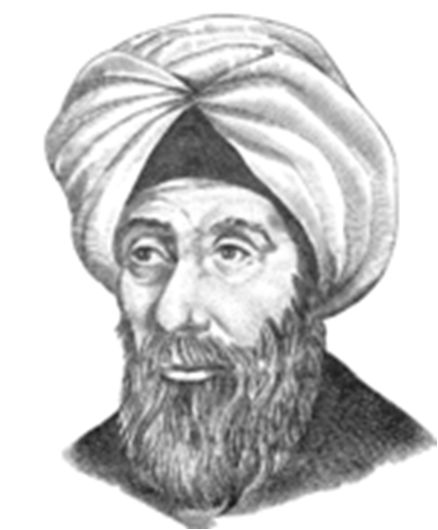
Ibn al-Haytham, 965–1039 CE Iraq. The Arab scholar is considered by some to be the father of modern scientific methodology due to his emphasis on experimental data and testing reproducibility of its results. Scientific researchers propose hypotheses as explanations of phenomena and design experimental studies to test these hypotheses. These steps must be repeatable to guard against mistake or confusion in any particular experimenter.
Another basic expectation is to document, archive and share all data and methodology so they are available for careful scrutiny by other scientists, giving them the opportunity to verify the results by attempting to reproduce them. This practice, called ‘full disclosure’, also allows statistical measures of the reliability of the data to be established.
According to Morris Kline, “Modern science owes its present flourishing state to a new scientific method which was fashioned almost entirely by Galileo Galilei.
Because science builds on previous knowledge, it consistently improves our understanding of the world. The process is confirmed by formalizing the attempt to disprove hypotheses rather than prove them. Invention, sagacity and genius are required at every step. He went through imprisonment and ridicule by the religious authorities who considered some of his finding blasphemous.
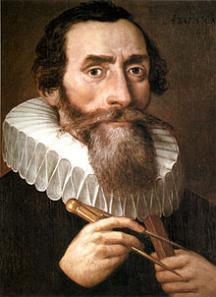
Johannes Kepler is best known for his laws of planetary motion. Using the scientific method. Kepler vigorously defended Copernicus’s vision of the sun centered solar system and calculated all the known planetary orbits in spectacular detail and he calculated the lunar and solar eclipses. As a devout Lutheran, the publication of his findings led him into political and religious difficulties, since his findings contradicted then current biblical teachings. He was banished from his home city of Graz. Johannes continued to analyze Tycho Brae’s Mars observations in Prague. He calculated the orbit and direction of mars, and developed the law of optics among many other contributions to science.
In October 1604 he viewed a new star (supernova). He noted the lack of observed parallax to argue it was in the sphere of fixed stars further undermining the religious doctrine of the immutability of the heavens. The birth of a new star implied the variability of the heavens. He also invented a new technology for telescopes using two convex lenses which produced higher magnification.
5_CONFLICTING KNOWLEDGE
In religious expressions of knowledge, knowledge is entirely centered on the relative deity having ultimate and complete knowledge of all things. The Old Testament’s tree of the knowledge of good and evil contained knowledge that separated man from god: ‘And the lord god said, behold, the man is become as one of us, to know good and evil…’ (Genesis 3:22) Who is God talking to? And who is there to write about this? Does this mean they are also Gods?
Hindu scriptures present two kinds of knowledge, 1) second hand knowledge such as, books, hearsay, gossip, interpretations etc. 2) direct experience being knowledge that one discovers for oneself.
The Quran asserts that all knowledge comes from Allah (2:239) Muhammad is reported to have said ‘seek knowledge from the cradle to the grave’. He sought knowledge from god only, with the inheritors being ‘prophets, Islamic scholars, theologians and jurists. Apparently, no one else can represent conflicting knowledge in any official capacity.
Observant Jews flail about and recite three times a day, ‘favour us with knowledge, understanding and discretion that comes from you. Exalted are you, Existent one, the gracious river of knowledge.’ If I did that three times a day every day, I might have a headache and not know anymore than when I started, maybe less. (see advertising imprints and how they affect our mind)
The content of one’s religious knowledge may vary from person to person, as will the degree to which it may occupy the person’s thoughts (frequency), the intensity of the knowledge, and the centrality of the information.
6_INTELLIGENCE
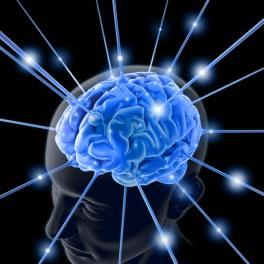
Intelligence is defined as a mental capability that, among other things, involves the ability to reason, plan, solve problems, think abstractly, comprehend complex ideas, learn quickly and learn from experience. It reflects a broader and deeper capability for comprehending our surroundings and making sense of things. Individuals differ from one another in their ability or willingness to understand complex ideas. I think of our brains as big muscles, mentally. It craves to be exercised, and the more it exercises the more useful it becomes. It becomes a tool to create, free from nonsense and brain numbing dogma. You and I both have that ability from this moment on.
7_IGNORANCE
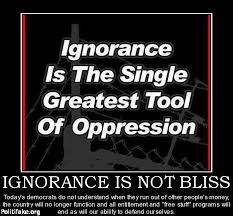
They say, Ignorance is simply a lack of knowledge. Everyone is ignorant. I am ignorant. You are ignorant. You could be the greatest scientist and you will still be very ignorant.
Ignorance is the main force behind almost all prejudices and bias. Not understanding differences leads to conflict. Prejudices are the chains forged by ignorance to keep people apart. The word prejudice even implies pre-judging, or judging beforehand, without the knowledge to judge accurately. Judging before knowledge is a hallmark of ignorance.
Many groups build intolerance and prejudice among their followers keeping people trapped in a system of belief based solely on ancient realities that can be clearly challenged with modern evidence.
Without knowledge we would still be trying to light our first fire. Most of us have a choice between knowledge and ignorance. I say most of us because many people do not have this option. Ignorance is consecrated and vigorously defended by many a dogma. Many terrorist and extremist organizations base their ancient belief of reality on suppression of any education which may conflict with their belief. Ignorance promotes denial.
John Sculley wrote: Nothing will divide us more than ignorance, and nothing will bring us closer together than knowledge.
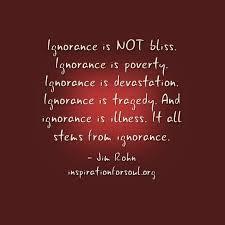
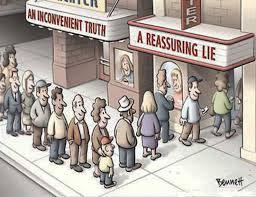
James Allen wrote: There is no evil in the Universe which is not the result of ignorance, and which would not, if we were ready and willing to learn its lesson, lead us to a higher wisdom.

Hendrik Loon wrote: An ignorant person is, by the very fact of his or her ignorance, a very dangerous person.
William McAdoo wrote: It is impossible to defeat an ignorant person in an argument.
Aldous Huxley wrote: Most ignorance is blissful ignorance. We don’t know because we don’t want to know.
William Rotsler wrote: Ignorance is the beginning of knowledge; knowledge is the beginning of wisdom; wisdom is the awareness of ignorance.
Herbert Spencer wrote: There is a principle which is a bar against all information, which is proof against all arguments and which cannot fail to keep a person in everlasting ignorance. That principle is contempt prior to investigation.
Thomas Jefferson said; If a nation expects to be ignorant and free, in a state of civilization, it expects what never was and never will be. ‘Ignorance of the law’ is no legal excuse. Here’s to a happy existence! Next written history

Have a happy day and hug someone.