
Chapter 6
Cultural
Chapter 6
Cultural
MENU
1_IRVING FINKEL
2_LEONARDO DA VINCI
3_ALEXANDER GRAHAM BELL
4_THOMAS ALVA EDISON
1_IRVING FINKEL
Thegreatdiaryproject.co.uk(opens in new tab)
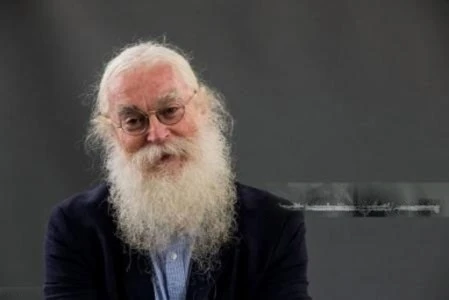
Irving Leonard Finkel (born 1951) is an English philologist and Assyriologist. He is the Assistant Keeper of Ancient Mesopotamian script, languages and cultures in the Department of the Middle East in the British Museum, where he specialises in cuneiform inscriptions on tablets of clay from ancient Mesopotamia.
Finkel spent three years as a Research Fellow at the University of Chicago Oriental Institute. In 1976 he returned to the UK, and was appointed Assistant Keeper in the Department of Western Asiatic Antiquities at the British Museum, where he was (and remains) responsible for curating, reading and translating the museum’s collection of around 130,000 cuneiform tablets.
In 2014, Finkel’s study of a cuneiform tablet that contained a flood narrative similar to that of the story of Noah’s Ark, described in his book The Ark Before Noah, was widely reported in the news media. The ark described in the tablet was circular, essentially a very large coracle or kuphar and made of rope on a wooden frame. The tablet included sufficient details of its dimensions and construction to enable a copy of the ark to be made at about 1/3 scale, as documented in a 2014 TV documentary Secrets of Noah’s Ark that aired as an episode of PBS’s NOVA series. The reconstructed ark was floated with partial success given that the bitumen used as sealant for the vessel walls immediately succumbed to leaks and a petrol powered pump had to continuously be used to pump out water.
2_LEONARDO DA VINCI
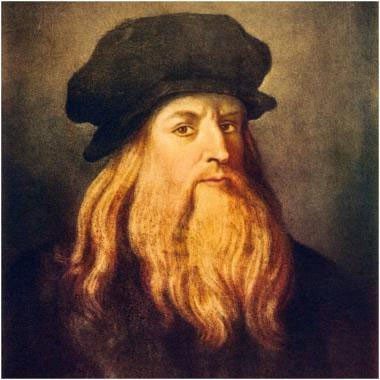
Leonardo da Vinci (1452 – 1519) was an Italian polymath of the High Renaissance who was active as a painter, draughtsman, engineer, scientist, theorist, sculptor, and architect. While his fame initially rested on his achievements as a painter, he has also become known for his notebooks, in which he made drawings and notes on a variety of subjects, including anatomy, astronomy, botany, cartography, painting, and palaeontology. Leonardo is widely regarded as a genius who epitomised the Renaissance humanist ideal, and his collective works contributed to the development of European art to an extent rivalled only by that of his younger contemporary Michelangelo.
The Mona Lisa is a half-length portrait painting by the Italian artist Leonardo da Vinci. Considered an archetypal masterpiece of the Italian Renaissance, it has been described as “the best known, the most visited, the most written about, the most sung about, the most expensive, parodied work of art in the world.” insurance valuation in history at US:100 million in 1962, equivalent to :1 billion as of 2023.
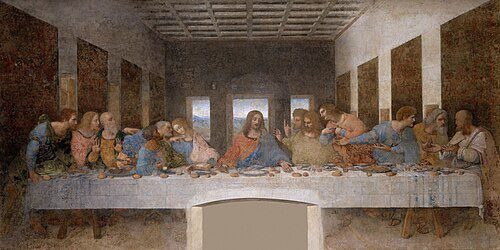
Many of his other paintings are famous and priceless, like ‘the last supper’. But he was much more than a great artist.
Revered for his technological ingenuity, he conceptualised flying machines, a type of armoured fighting vehicle, concentrated solar power, a ratio machine that could be used in an adding
machine, and the double hull. Relatively few of his designs were constructed or were even feasible during his lifetime, as the modern scientific approaches to metallurgy and engineering were only in their infancy during the Renaissance. Some of his smaller inventions, however, entered the world of manufacturing unheralded, such as an automated bobbin winder and a machine for testing the tensile strength of wire. He made substantial discoveries in anatomy, civil engineering, hydrodynamics, geology, optics, and tribology, but he did not publish his findings and they had little to no direct influence on subsequent science.
3_ALEXANDER GRAHAM BELL
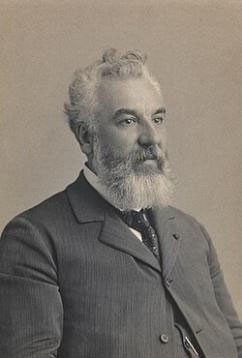
Alexander Graham 1847 – 1922) was a Scottish-born Canadian-American inventor, scientist, and engineer who is credited with patenting the first practical telephone. He also co-founded the American Telephone and Telegraph Company (AT&T) in 1885.
Many other inventions marked Bell’s later life, including ground-breaking work in optical telecommunications, hydrofoils, and aeronautics. Bell also had a strong influence on the National Geographic Society and its magazine while serving as its second president from 1898 to 1903.
Beyond his work in engineering, Bell had a deep interest in the emerging science of heredity. His work in this area has been called “the soundest, and most useful study of human heredity proposed in nineteenth-century America … Bell’s most notable contribution to basic science, as distinct from invention.”
The Mona Lisa is a half-length portrait painting by the Italian artist Leonardo da Vinci. Considered an archetypal masterpiece of the Italian Renaissance, it has been described as “the best known, the most visited, the most written about, the most sung about, the most expensive, parodied work of art in the world.” insurance valuation in history at US:100 million in 1962, equivalent to :1 billion as of 2023.
4_THOMAS ALVA EDISON
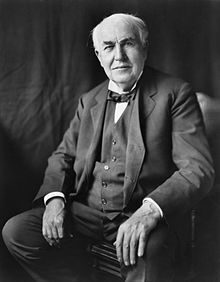
1847 to 1931 CE West orange New Jersey. Self educated. Genious Inventor businessman and Pantheist. “Genius is one percent inspiration, ninety-nine percent perspiration”
Edison developed many devices that greatly influenced life around the world, including the phonograph, the motion picture camera, and a long lasting, practical electric light bulb. He was dubbed ‘The Wizard of Menlo Park’. He was one of the first inventors to apply the principles of mass production and large scale teamwork to the process of invention, and because of that, he is often credited with the creation of the first industrial research laboratory.
Edison was a prolific inventor, holding 1,093 US patents in his name, as well as many patents in the UK, France, and Germany. More significant than the number of Edison’s patents, are the impacts of his inventions, because Edison not only invented things, his inventions established major new industries world-wide, notably, electric light and power utilities, sound recording and motion pictures.
His advanced work in these fields was an outgrowth of his early career as a telegraph operator which he got when he saved three year old Jimmie Mackenzie from a runaway train. Edison developed a system of electric power generation and distribution to homes, businesses, and factories – a crucial development in the modern industrialized world.
His father Samuel Edison of Dutch ancestry had to escape from Canada because of his part in the Mackenzie Rebellion of 1837. Edison had three months of official schooling and his mother taught him at home. He sold candy and newspapers on trains to supplement his income. He then printed the Grand Trunk Herald and began a long streak of entrepreneurial ventures. His talent as a businessman led him to found 14 companies including General Electric which is still one of the largest publicly traded companies in the world.
At the age of 19 Edison became an employee of Western Union, where he worked the bureau’s news wire. Working the night shift he had plenty of time to spend reading and experimenting. He was fired for spilling sulphuric acid on his boss’s desk. His first patent was for the electric vote recorder.
He married 16 year old Mary Stilwell on December 25, 1871 and they had three children. After she died of a brain-tumor in 1884. In 1886 Edison married 20 year old Mina Miller who was the daughter of the inventor Lewis Miller, benefactor of Methodist charities. They also had three children.
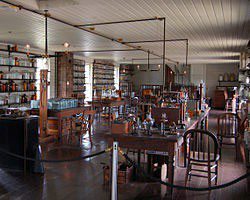
Edison’s major innovation was the first industrial research lab set up with the specific purpose of producing constant technological innovation and improvement. Edison kept a stock of almost every conceivable material including eight thousand kinds of chemicals, every kind of screw made, every size of needle, every kind of cord or wire, and the list goes on. There is no expedient to which a man will not resort to avoid the real labour of thinking. In 1877 Edison invented the phonograph which made him a celebrity. He was described by renowned scientists as ‘the most ingenious inventor’.
Historian Paul Israel has characterized Edison as a (freethinker). Edison was heavily influenced by Thomas Paine’s (The Age of Reason). Edison defended Paine’s ‘scientific deism’, saying, “He has been called an atheist, but atheist he was not. Paine believed in a supreme intelligence, as representing the idea which other men often express by the name of deity.” In an October 2, 1910, interview in the New York Times Magazine, Edison stated:
“Nature is what we know. We do not know the gods of religions. And nature is not kind, or merciful, or loving. If God made me — the fabled God of the three qualities of which I spoke: mercy, kindness, love — He also made the fish I catch and eat. And where do His mercy, kindness, and love for that fish come in? No; nature made us — nature did it all — not the gods of the religions.”
Edison was rightly accused of being an atheist for those remarks, and although he did not allow himself to be drawn into the controversy publicly, he clarified himself in a private letter:
“You have misunderstood the whole article, because you jumped to the conclusion that it denies the existence of God. There is no such denial, what you call God, I call Nature, the Supreme intelligence that rules matter.(the essence of Pantheism) All the article states is that it is doubtful in my opinion if our intelligence or soul or whatever one may call it lives hereafter as an entity or disperses back again from whence it came, scattered amongst the cells of which we are made.”
He also stated, “I do not believe in the God of the theologians; but that there is a Supreme Intelligence I do not doubt.”
Non violence was key to Edison’s moral views, and when asked to serve as a naval consultant for World War I, he specified he would work only on defensive weapons and later noted, “I am proud of the fact that I never invented weapons to kill.” Edison’s philosophy of nonviolence extended to animals as well, about which he stated: “Nonviolence leads to the highest ethics, which is the goal of all evolution. Until we stop harming all other living beings, we are still savages.” However, he is also notorious for having electrocuted a number of dogs in 1888, both by direct and alternating current, in an attempt to argue that the former (which he had a vested business interest in promoting) was safer than the latter (favoured by his rival George Westinghouse).
Edison’s success in promoting direct current as less lethal also led to alternating current being used in the electric chair adopted by New York in 1889 as a supposedly humane execution method.
Because Westinghouse was angered by the decision, he funded Eighth Amendment-based appeals for inmates set to die in the electric chair, ultimately resulting in Edison providing the generators which powered early electrocutions and testifying successfully on behalf of the state that electrocution was a painless method of execution.