
Chapter 5
Science
Chapter 5
Science
MENU
1_DR. CARL SAGAN
2_PROFESSOR BRIAN COX
3_PROFESSOR NEIL DEGRASSE TYSON
4_ANTON PETROV
5_RICHARD FEYNMAN
6_FRASER CAIN
7_SABINE HOSSENFELDER
8_LAURENCE KRAUSS
9_PROFESSOR DAVID KIPPING
10_PROFESSOR SEAN CARROLL
11_STEVEN HAWKING
12_ALBERT EINSTEIN
13_SAM HARRIS
1_DR. CARL SAGAN
The guy I grew up watching, his fabulous series on cosmology, astronomy, geology, and other space sciences, sparked a dreamy like fascination of science for me.
In 1934, scientist Carl Sagan was born in Brooklyn, N.Y. After earning bachelor and master’s degrees at Cornell, Sagan earned a double doctorate at the University of Chicago in 1960. He became professor of astronomy and space science and director of the Laboratory for Planetary Studies at Cornell University, and co-founder of the Planetary Society. A great popularizer of science, Sagan produced the PBS series, “Cosmos,” which was Emmy and Peabody award-winning, and was watched by 500 million people in 60 countries. A book of the same title came out in 1980, and was on The New York Times bestseller list for 7 weeks. Sagan was author, co-author or editor of 20 books, including The Dragons of Eden (1977), which won a Pulitzer, Pale Blue Dot
In 1968, now a well-known quantity in the scientific realm, Sagan briefly served as a consultant on the Stanley Kubrick (opens in new tab)film 2001: A Space Odyssey.
In the 1970s and 1980s, Sagan was the most well-known scientist in the United States, helped in no small part by the books he wrote. Works such as The Cosmic Connection: An Extraterrestrial Perspective (1973), Other Worlds (1975), The Dragons of Eden: Speculations on the Evolution of Human Intelligence (1977; Pulitzer Prize winner) and his 1985 novel, Contact (made into a film starring Jodie Foster(opens in new tab) in 1997), all grabbed the attention of the scientific community and general audiences.
2_PROFESSOR BRIAN COX
Professor Brian Cox Live – Emergence World Tour(opens in new tab)
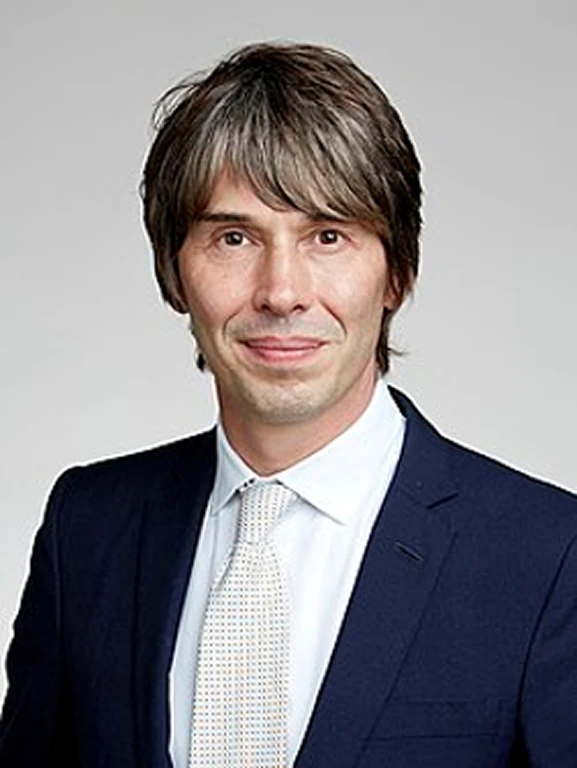
Brian Edward Cox (born 3 March 1968) is an English physicist and musician. He is a professor(opens in new tab) of particle physics(opens in new tab) in the School of Physics and Astronomy(opens in new tab) at the University of Manchester(opens in new tab) and the Royal Society Professor for Public Engagement in Science. He is best known to the public as the presenter of science programmes, especially BBC Radio 4(opens in new tab)‘s The Infinite Monkey Cage(opens in new tab) and the Wonders of... series and for popular science(opens in new tab) books, including Why Does E=mc2?(opens in new tab) (2009) and The Quantum Universe(opens in new tab) (2011).
David Attenborough(opens in new tab) described Cox as the natural successor for the BBC(opens in new tab)‘s scientific programming. Before his academic career, he was a keyboard player for the bands Dare(opens in new tab) and D:Ream(opens in new tab)
3_PROFESSOR NEIL DEGRASSE TYSON
Neildegrassetyson.com(opens in new tab)
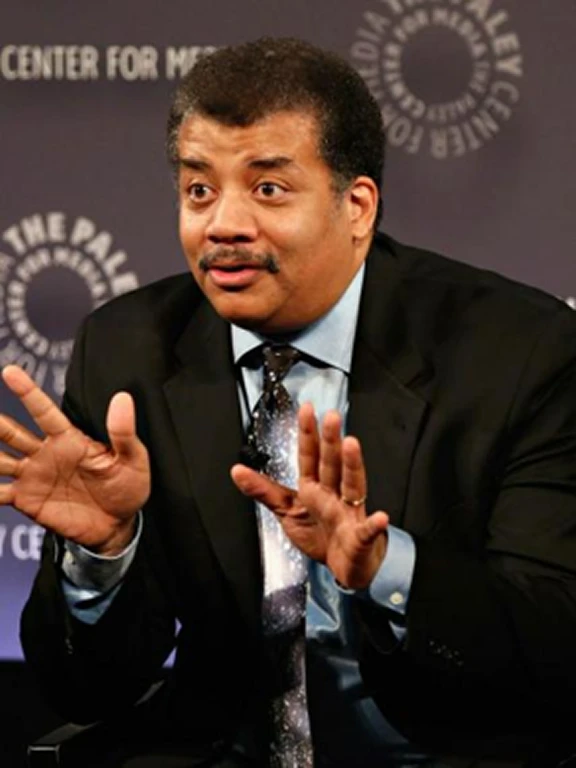
Neil deGrasse Tyson was born and raised in New York City where he was educated in the public schools clear through his graduation from the Bronx High School of Science(opens in new tab). Tyson went on to earn his BA in Physics from Harvard(opens in new tab) and his PhD in Astrophysics from Columbia(opens in new tab).
In 2001, Tyson was appointed by President Bush to serve on a twelve-member commission that studied the Future of the U.S. Aerospace Industry. The final report was published in 2002 and contained recommendations (for Congress and for the major agencies of the government) that would promote a thriving future of transportation, space exploration, and national security.
In 2004, Tyson was once again appointed by President Bush to serve on a nine-member commission on the Implementation of the United States Space Exploration Policy, dubbed the “Moon, Mars, and Beyond”(opens in new tab) commission. This group navigated a path by which the new space vision can become a successful part of the American agenda. And in 2006, the head of NASA appointed Tyson to serve on its prestigious Advisory Council, which guides NASA through its perennial need to fit ambitious visions into restricted budgets.
In addition to dozens of professional publications(opens in new tab), Dr. Tyson has written, and continues to write for the public. From 1995 to 2005, He was a monthly essayist for Natural History(opens in new tab) magazine under the title Universe. And among Tyson’s eighteen books is his memoir The Sky is Not the Limit, Adventures of an Urban Astrophysicist, Origins, Fourteen Billion Years of Cosmic Evolution(opens in new tab), co-written with Donald Goldsmith. Origins is the companion book to the PBS NOVA four-part mini-series Origins(opens in new tab), in which Tyson served as on-camera host. The program premiered in September 2004.
Two of Tyson’s other books are the playful and informative Death By Black Hole and Other Cosmic Quandaries(opens in new tab), which was a New York Times bestseller, and The Pluto Files: The Rise and Fall of America’s Favorite Planet(opens in new tab), chronicling his experience at the center of the controversy over Pluto’s planetary status. The PBS NOVA documentary The Pluto Files, based on the book, premiered in March 2010.
In February 2012, Tyson released his tenth book, containing every thought he has ever had on the past, present, and future of space exploration: Space Chronicles: Facing the Ultimate Frontier(opens in new tab).
For five seasons, beginning in the fall of 2006, Tyson appeared as the on-camera host of PBS NOVA’s spin off program NOVA ScienceNOW(opens in new tab), which is an accessible look at the frontier of all the science that shapes the understanding of our place in the universe.
During the summer of 2009 Tyson identified a cadre of professional standup comedians to assist his effort in bringing science to commercial radio with the NSF-funded pilot program Star Talk. Now also a popular Podcast(opens in new tab), for three years it enjoyed a limited-run Television Series(opens in new tab) on the National Geographic Channel. Star Talk combines celebrity guests with informative yet playful banter. The target audience is all those people who never thought they would, or could, like science. In its first year on television and in three successive seasons, it was nominated for a Best Informational Programming Emmy.
Tyson is the recipient of twenty-seven honorary doctorates and the NASA Distinguished Public Service Medal, the highest award given by NASA to a non-government citizen. His contributions to the public appreciation of the cosmos have been recognized by the International Astronomical Union in their official naming of asteroid “13123 Tyson.” And by zoologists, with the naming of Indirani Tysoni(opens in new tab), a native species of leaping frog in India.
On the lighter side, Tyson was voted “Sexiest Astrophysicist Alive” by People Magazine in 2000.
In 2017, Tyson published Astrophysics for People In A Hurry(opens in new tab), which was a domestic and international bestseller. This adorably readable book is an introduction to all that you’ve read and heard about that’s making news in the universe—consummated, in one place, succinctly presented, for people in a hurry.
That was followed in 2018 by Accessory to War: The Unspoken Alliance Between Astrophysics and the Military(opens in new tab), coauthored with Avis Lang, in 2019 by Letters from an Astrophysicist(opens in new tab), both New York Times Bestsellers, and in 2021 by Cosmic Queries: StarTalk’s Guide to Who We Are, How We Got Here, and Where We are Going(opens in new tab), coauthored with James Trefil.
He served as Executive Science Editor and on-camera Host & Narrator for Cosmos: A SpaceTime Odyssey(opens in new tab), the 21st century continuation of Carl Sagan’s landmark television series. The show began in March 2014 and ran thirteen episodes in primetime on the FOX network, and appeared in 181 countries in 45 languages around the world on the National Geographic Channels. Cosmos won four Emmy Awards, a Peabody Award, two Critics Choice awards, as well as a dozen other industry recognitions.
Tyson reprised his role as on-camera host for the next season of Cosmos—Cosmos: Possible Worlds, which premiered on the National Geographic Channel in March 2020 and on the FOX network in September 2020.
Tyson’s latest books are Starry Messenger: Cosmic Perspectives on Civilization(opens in new tab) containing his life’s wisdom, on the intersection of science literacy and culture, and to Infinity and Beyond: A Journey of Cosmic Discovery(opens in new tab), coauthored with Lindsey Nyx Walker, both New York Times bestsellers.
In 2024, Tyson published Merlin’s Tour of the Universe, a 21st century update of his very first book, a playful Q&A on the universe conducted by Merlin, a visitor from Andromeda whose task is to help Earthlings understand how the universe works. The book is illustrated by his artist brother, Stephen J. Tyson.
Tyson leads the world-renowned Hayden Planetarium(opens in new tab) of the American Museum of Natural History in New York City where he is the first occupant of its Frederick P. Rose Directorship. He is also a research associate of the Museum’s Department of Astrophysics(opens in new tab).
4_ANTON PETROV
Antonpetrov.com(opens in new tab)
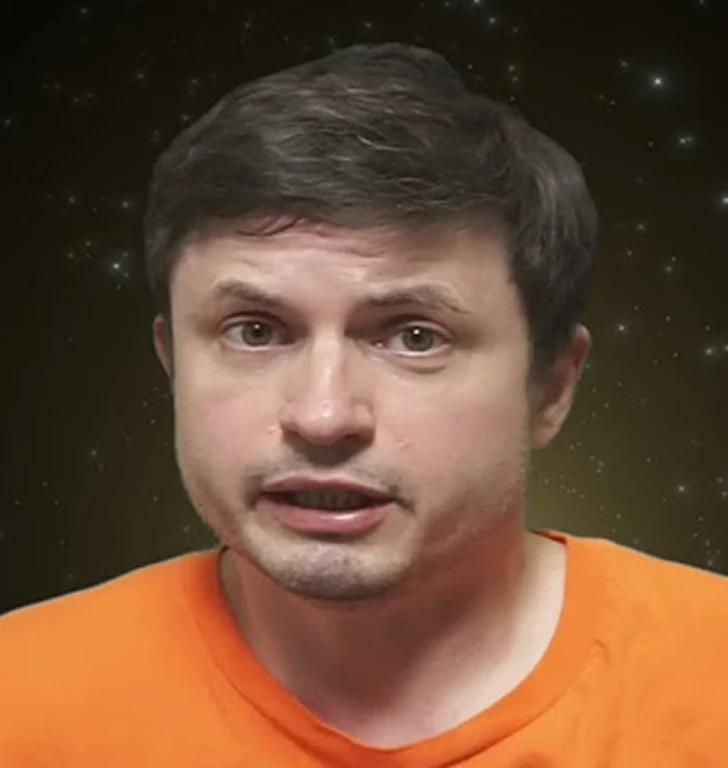
My name is Anton and I explain science, math or other complicated topics using simulations, video games and easy to understand words. This is a (mostly) family friendly channel with the focus on science education, space video game.
The content of Anton Petrov’s YouTube channel is largely dedicated to scientific education, with a strong emphasis on space and astronomy. In his daily videos, Petrov discusses the latest discoveries in astrophysics, cosmic phenomena, and space exploration news. He often breaks down recent research papers or NASA announcements for a general audience, making sense of cutting-edge-findings about planets(opens in new tab), stars(opens in new tab), black holes(opens in new tab), and more.
While astronomy is the primary focus, Petrov also ventures into related areas of science and technology. His channel description notes that it occasionally features topics on space-themed video games, general technology, or programming and coding. This means viewers might find an explainer on a new space telescope one day, and a discussion about an algorithm or a futuristic technology the next. Petrov himself has highlighted that he aims to cover a broad range of “science, math or other complicated topics” in an understandable way, and fans have noted he sometimes touches on biology or physics topics beyond space science as well.
5_RICHARD FEYNMAN
Richard P. Feynman (1918–1988) was a professor at Cornell University and CalTech and received the Nobel Prize for physics in 1965. In 1986 he served with distinction on the Rogers Commission investigating the space shuttle Challenger disaster.
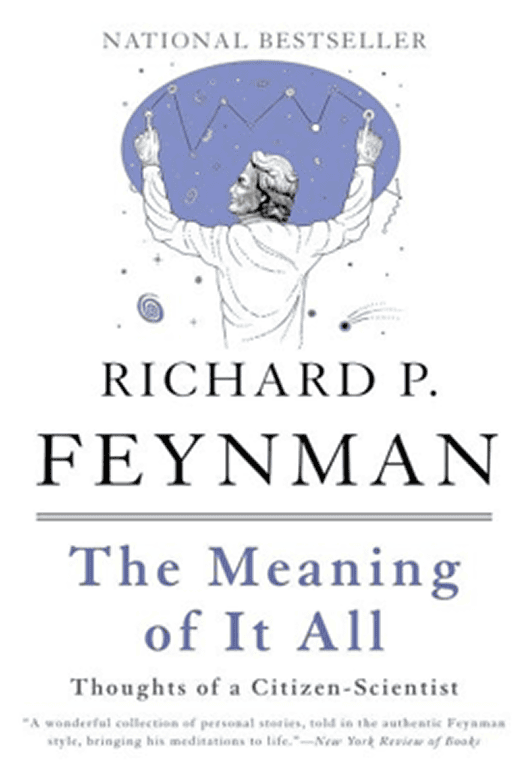
Many appreciate Richard P. Feynman’s contributions to twentieth-century physics, but few realize how engaged he was with the world around him — how deeply and thoughtfully he considered the religious, political, and social issues of his day. Now, a wonderful book — based on a previously unpublished, three-part public lecture he gave at the University of Washington in 1963 — shows us this other side of Feynman, as he expounds on the inherent conflict between science and religion, people’s distrust of politicians, and our universal fascination with flying saucers, faith healing, and mental telepathy. Here we see Feynman in top form: nearly bursting into a Navajo war chant, then pressing for an overhaul of the English language (if you want to know why Johnny can’t read, just look at the spelling of “friend”), and ruminating on the death of his first wife from tuberculosis. This is quintessential Feynman — reflective, amusing, and ever enlightening.
His very amusing u-tube videos make sense of difficult questions.
6_FRASER CAIN
https://www.astronomycast.com(opens in new tab)
Science analyst and presenter of all things space. I rely on him to interpret some difficult questions. www.universetoday.com(opens in new tab)
Universe Today (U.T.) is a North American(opens in new tab)-based non-commercial space(opens in new tab) and astronomy(opens in new tab) news website founded by Fraser Cain(opens in new tab). The domain was registered on December 30, 1998, and the website went live in March 1999. Universe Today assumed its current form on July 24, 2003, featuring astronomy news and other space-related content.
7_SABINE HOSSENFELDER
Sabinehossenfelder.com(opens in new tab)
Sabine is creative director of the YouTube channel “Science with Sabine”(opens in new tab). Together with her team, she produces and presents short summaries of scientific topics of current interest, from quantum technologies and cosmology to climate change, renewable energies, space exploration, and new technologies like nanobots and the hyperloop. All her videos are thoroughly fact-checked and supplemented with references to the peer reviewed literature.
After post-doctoral posts at the GSI Helmholtz Centre for Heavy Ion Research(opens in new tab), University of Arizona, UC Santa Barbara and Perimeter Institute in Canada, she joined NORDITA in Stockholm as an assistant professor in 2009. In 2015 she moved to the Frankfurt Institute for Advanced Studies, where she led the “Analog Systems for Gravity Duals” group and, in 2019, received the institute’s inaugural Award for Innovative Thinking. From 2023 to 2025, she was affiliated with the LMU Munich Center for Mathematical Philosophy, where she researched the role of locality and fine-tuning in quantum-mechanical foundations.
On YouTube, her channel reached 1.72 million subscribers and 293 million total views by April 2025. She is entertaining and with some funny analytics.
8_LAURENCE KRAUSS
Lawrencemkrauss.com(opens in new tab)
Lawrence Krauss is an internationally known theoretical physicist and bestselling author, as well as being an acclaimed lecturer. He has also appeared regularly on radio and television, as well as in several feature films.
He was born in New York City and moved shortly thereafter to Toronto, Canada, where he grew up. He received undergraduate degrees in both Mathematics and Physics at Carleton University. He received his Ph.D. in Physics from the Massachusetts Institute of Technology (1982), then joined the Harvard Society of Fellows (1982-85). He joined the faculty of the departments of Physics and Astronomy at Yale University as assistant professor in 1985, and associate professor in 1988.
From 1993-2008 he was Ambrose Swasey Professor of Physics, Professor of Astronomy at Case Western Reserve University. From 1993-2005 he also served as Chair of the Physics Department there. During this period he built up the department, which was ranked among the top 20 Physics Graduate Research Programs in the country in a 2005 national ranking.
Among the major new initiatives he spearheaded were the creation of one of the leading particle astrophysics experimental and theoretical programs in the US, the Center for Education and Research in Cosmology and Astrophysics, and the creation of a groundbreaking Masters Program in Physics Entrepreneurship.
Among his numerous important scientific contributions was the proposal, in 1995, that most of the energy of the Universe resided in empty space. This prediction was verified in 1999 by two teams of astronomers, and the discovery was awarded the Nobel Prize in 2011. In 2008 he was appointed as Foundation Professor in the School of Earth and Space Exploration and Physics Department, and Inaugural Director of the Origins Project at Arizona State University. During the decade (2008-2018) in which he led the program, the Origins Project became internationally recognized for spearheading forefront research across the full spectrum of scholarly activity his renowned transdisciplinary workshops, and then bringing this exciting information to the public through its public events, bringing the most accomplished scholars, public intellectuals and celebrities in the world on stage at ASU to discuss topics ranging from the origins of the universe, to human origins, to the origins of consciousness and culture.
In 2019, he became President of The Origins Project Foundation, an independent non-profit organization that will carry on the mission of inspiring the wonder and excitement of knowledge, inquiry and creativity in new forums for the public. In 2019, he also became Host of The Origins Podcast, an exciting new video podcast focused on dialogues between Prof. Krauss and some of the most interesting people in the world from science, the arts, politics, and journalism. The podcast first aired in May of 2019. He also publishes the Substack site, Critical Mass, which includes essays, as well as links to podcasts and lectures.
9_PROFESSOR DAVID KIPPING
Coolworldslab.com (opens in new tab)
David Mathew Kipping is a British astronomer and associate professor at Columbia University(opens in new tab), where he leads the Cool Worlds Lab.
Following the completion of his doctorate, he served as a postdoctoral fellow at the Smithsonian Institution for six months in 2011. He then undertook a postdoctoral fellowship at Harvard University(opens in new tab) from 2011 to 2015, before joining Columbia University as an assistant professor in 2015.
In 2016, Kipping launched the YouTube channel Cool Worlds to share his research topics with the wider public. Along with Ingo Waldmann and Steve Fossey, Kipping discovered in 2009 the exoplanet HD 80606b.
In 2011, Kipping founded the Hunt for Exomoons with Kepler, a project that searches for exomoons,( natural satellites of exoplanets) using data collected by the Kepler space telescope. In 2019, Kipping proposed a method of spaceflight known as the halo drive.
10_PROFESSOR SEAN CARROLL
preposterousuniverse.com(opens in new tab)
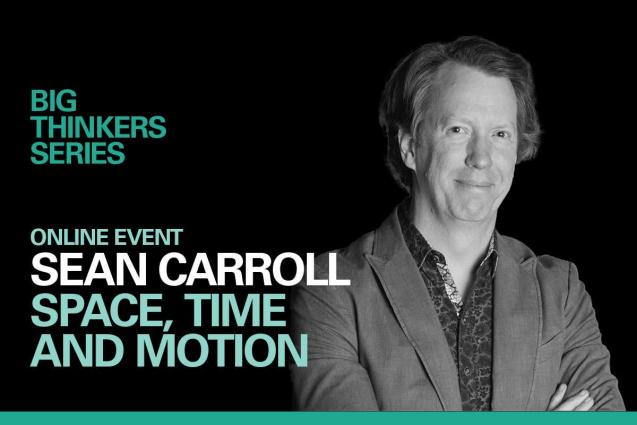
Sean Michael Carroll (born October 5, 1966) is an American theoretical physicist who specializes in quantum mechanics, cosmology, and the philosophy of science. He is the Homewood Professor of Natural Philosophy at Johns Hopkins University.
He was formerly a research professor at the Walter Burke Institute for Theoretical Physics at the California Institute of Technology (Caltech) department of physics. He also is currently an external professor at the Santa Fe Institute, and he has been a contributor to the physics blog Cosmic Variance, where he has published in scientific journals such as Nature as well as other publications, including The New York Times, Sky & Telescope, and New Scientist.
He is known for his atheism, his vocal critique of theism and defense of naturalism. He is considered a prolific public speaker and science popularizer. In 2007, Carroll was named NSF Distinguished Lecturer by the National Science Foundation.
OTHERS INCLUDE: The rest is science, The royal institution, The wandering neuron, Science documentaries, The royal institution.
11_STEVEN HAWKING
Stephen William Hawking (1942 – 2018) was an English theoretical physicist, cosmologist, and author who was director of research at the Centre for Theoretical Cosmology at the University of Cambridge. Between 1979 and 2009, he was the Lucasian Professor of Mathematics at Cambridge, widely viewed as one of the most prestigious academic posts in the world.
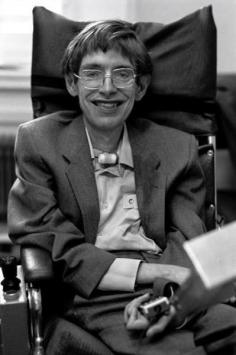
Hawking achieved commercial success with several works of popular science in which he discussed his theories and cosmology in general. His book A Brief History of Time appeared on the Sunday Times bestseller list for a record-breaking 237 weeks. Hawking was a Fellow of the Royal Society, a lifetime member of the Pontifical Academy of Sciences, and a recipient of the Presidential Medal of Freedom, the highest civilian award in the United States. In 2002, Hawking was ranked number 25 in the BBC‘s poll of the 100 Greatest Britons. He died in 2018 at the age of 76, having lived more than 50 years following his diagnosis of motor neurone disease.
In 1970, Hawking postulated what became known as the second law of black hole dynamics, that the event horizon of a black hole can never get smaller. With James M. Bardeen and Brandon Carter, he proposed the four laws of black hole mechanics, drawing an analogy with thermodynamics. This guy knew physics to the extreme.
12_ALBERT EINSTEIN
(1879-1955) The embodiment of genius and the pre-eminent scientist of the modern age, his theories and discoveries have profoundly affected the way people view and understand the world and their place in it. Einstein was also known as a philosopher and humanist who was keenly interested in and concerned about the affairs of the world.
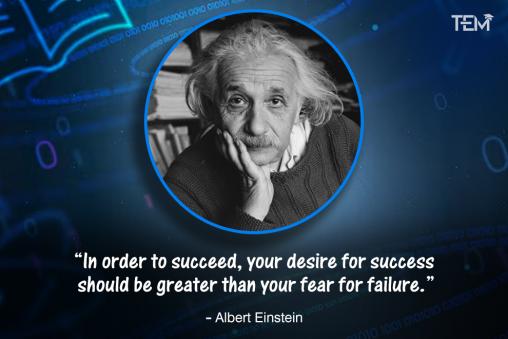

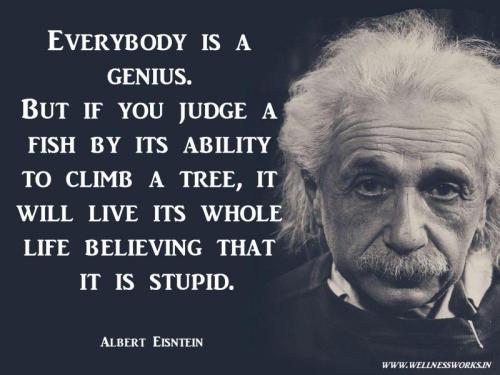
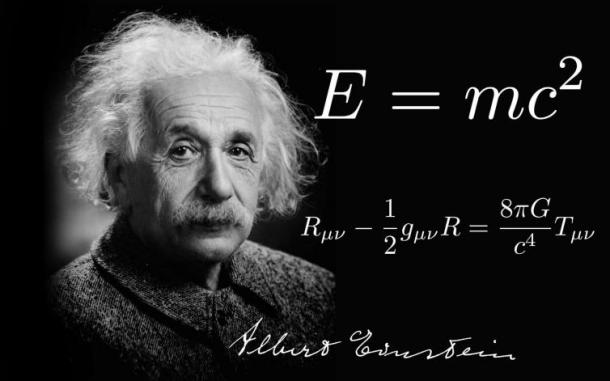
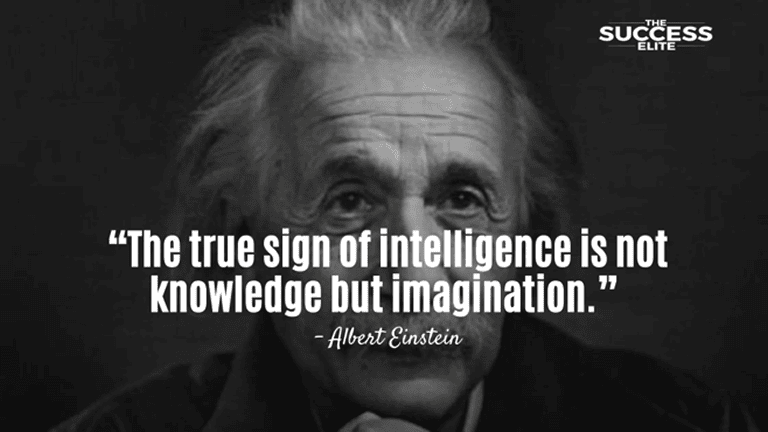
His sagacious, wise, and humorous quotations, letters, and articles are widely used throughout popular culture as well as in historical and academic works. Einstein’s name and image are instantly recognizable everywhere in the world.
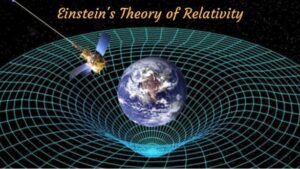
Albert Einstein was a theoretical physicist and the most famous scientist in human history. He developed the general theory of relativity, one of the two pillars of modern physics, alongside quantum mechanics. He is perhaps best known in popular culture for his mass/energy equivalence formula E=mc2. In 1921 he received the Nobel Prize in Physics for his “services to theoretical physics”, and in particular his discovery of the photoelectric effect, a pivotal step in the evolution of quantum theory.
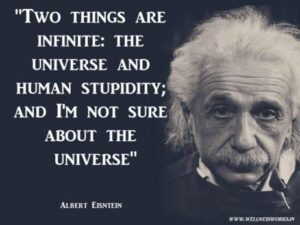
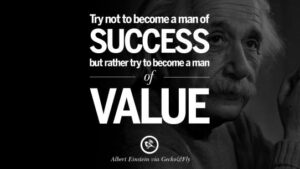
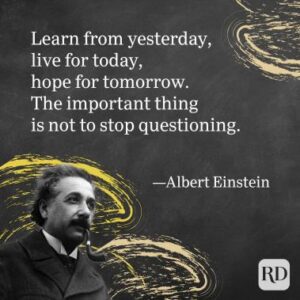
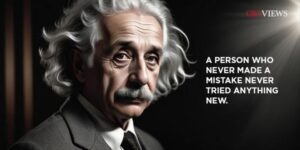
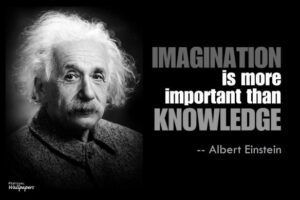
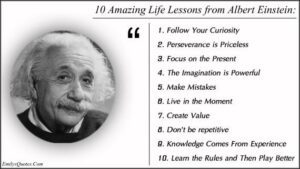
Instead of giving you a biography of this great man, I would like to share some of his quotes:
13_SAM HARRIS
Samharris.org(opens in new tab)

Sam Harris is a neuro-scientist, philosopher, New York Times best-selling author(opens in new tab), host of Making Sense(opens in new tab), and creator of Waking Up(opens in new tab).
While broadly well received for making meditation accessible, some debate the philosophical implications of equating subjective experiences strictly with brain states.