
Chapter 7
Astronomy
Chapter 7
Astronomy
INDEX
1_PREAMBLE
2_GROUND NEWS
3_ISAAC NEWTON
4_PBS SPACETIME
5_GALILEO GALILEI
6_NICOLAS COPERNICUS
7_EVENT HORIZON
8_ASTRUM
9_HUBBLE WEBB
10_JAMES GARDNER
1_PREAMBLE
We all have our sources for our thoughts. Our thoughts are cummulative and compounded by and from our preferred sources. Some of us get our input from local news or other sources. Some rely on google, X, or other social media sources. Some rely on comments and gossip. Some rely on psuedo-scientific delusions, and conspiracies. Some rely on supernatural beings and ancient myths.
Away from AI and modern media, books are the only publically available source of some credible evidence written outside of the current rebranding of history and understanding.
When you search for or watch something, the internet is designed to prioritize your searches to provide you with all information related to your searches. You might get the opinion that your preferred searches are dominant on the internet, when in fact you are receiving very limited and biased content. Internet sources create a breakdown of trust because everyone can now be a reporter. You can also.
If you repost or tweet something, it is imperative that you verify the source. That it is not ‘anonomous’ . That it is not from a bias source. That it is not a premature analysis. Does it want you to think a certain way. Could it be AI? Verify before spreading. Think for yourself before spreading someone else’s thoughts.
Your thoughts are more valuable to you than anyone else’s thoughts. How do you do this?
2_GROUND NEWS
Are you tired of conflicting news stories?
‘Ground.news’ is the source of sources. Ground.News was co-founded on January 15, 2020 by Canadian Harleen Kaur, The service marks every news source with a bias rating using terms borrowed from the left–right political spectrum. According to Ground News, sources on the far-left and far-right “use loaded words, publish misleading reports or leave out information” and are associated with the “most extreme left-leaning or right
leaning party members.” Ground News describes far-left publications as liberal.
There are no ads, and you receive the following information. Who owns your news source? Is it foreign owned? Who are the shareholders and what are their other affiliations? Who are the board of directors and officers, and their other involvements. What are their conflicts of interest? Are their political affiliations, left, right or center? I found a glowing independent news report on Alibaba was issued by Alibaba itself. You can easily spot affiliations through Ground.News Bias Bar.
Both these ratings are averaged out from the ratings of three companies: AllSides, Media Bias/Fact Check, and Ad Fontes Media, who each have their own methods for determining factuality and bias. As examples, Ground News uses this method to rate CNN as “left-leaning“, the Associated Press as “center”, and Fox News as “right-leaning”.
Blindspot
Ground News creates a weekly “blindspot” report, highlighting stories that received little to no coverage from one side of the political spectrum. Ground News uses natural language processing algorithms to identify related news stories, including ones that use differing vocabulary.
Over 50,000 sources. Rating description:
A FAR LEFT.
These publications tend to reflect the policy positions of the most extreme left-leaning party members. They are strongly biased toward liberal causes through story selection and/or political affiliation. They use strong wording that attempts to influence an audience by appealing to emotion or stereotypes. They may use loaded words, publish misleading reports or leave out information that could damage liberal causes.
B LEFT
These publications tend to reflect the current positions held by leaders of left-leaning parties. They are moderately biased toward liberal causes through story selection and/or political affiliation.
They may use loaded words, publish misleading reports or leave out information that doesn’t support liberal causes.
C LEAN LEFT
These publications have a slight to moderate liberal bias. They often publish factual information, but still may use loaded words that favor liberal causes.
D CENTER
These publications have no discernable political position. They use very few loaded words and the reporting is well sourced. On a given issue, they present a relatively complete survey of key competing positions. This rating does not necessarily represent “balance” or “neutrality.” A Center rating does not imply that the position is best or most valid.
E LEAN RIGHT
These publications are slightly to moderately conservative in bias. They often publish factual information, but still, may use loaded words that favor conservative causes.
F RIGHT
These publications tend to reflect the current positions held by leaders of right-leaning parties. They are moderately biased toward conservative causes through story selection and/or political affiliation. They may publish misleading reports or leave out information that doesn’t support conservative causes.
G FAR RIGHT
These publications tend to reflect the policy positions of the most extreme right-leaning party members. They are strongly biased toward conservative causes through story selection and/or political affiliation. They use strong wording that attempts to influence an audience by appealing to emotion or stereotypes. They may use loaded words, publish misleading reports or leave out information that could damage conservative causes.
The stated goal of the service is to counteract media bias by displaying news events with sources from across the political spectrum. When a story is selected on Ground News, the user will see several outlets that have reported on the story labeled by their political leaning. Ground News follows a freemium model which allows users to view news as a guest, with a free account, or with a paid account.
I trust my sources because they do what I do. I list my sources. There are too many other sources to detail. The following are just some sources:
3_ISAAC NEWTON
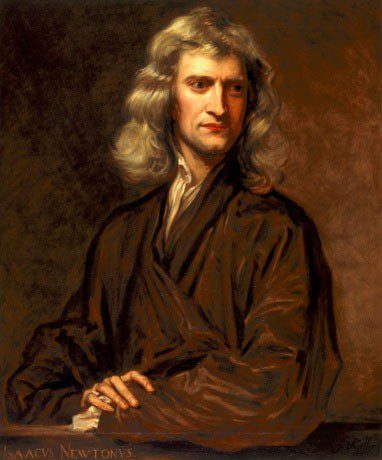
1643 to 1727 BCE. Sir Isaac Newton 25
December] 1643 to 1727) was an English polymath, mathematician, physicist, astronomer, alchemist, theologian, author and inventor. He was a key figure in the Scientific Revolution and the Enlightenment that followed. His
book Principia Mathematica, first published in 1687, achieved the first great unification in physics and established classical mechanics. Newton also made seminal contributions to optics, and shares credit with the German mathematician Gottfried Wilhelm Leibniz for formulating infinitesimal calculus, although he developed calculus years before Leibniz. Newton contributed to and refined the scientific method, and his work is considered the most influential in bringing forth modern science.
In the Principia, Newton formulated the laws of motion and universal gravitation that formed the dominant scientific viewpoint for centuries until it was superseded by the theory of relativity. While this is the case, his laws still serve as excellent approximations for the vast majority of physical phenomena involving low speeds (much less than the speed of light) and weak gravitational fields. He used his mathematical description of gravity to derive Kepler’s laws of planetary motion, account for tides, the trajectories of comets, the precession of the equinoxes and other phenomena, eradicating doubt about the Solar System’s heliocentricity. Newton solved the two-body problem and introduced the three-body problem. He demonstrated that the motion of objects on Earth and celestial bodies could be accounted for by the same principles. Newton’s inference that the Earth is an oblate spheroid was later confirmed by the geodetic measurements of Alexis Clairaut, Charles Marie de La Condamine, and others, convincing most European scientists of the superiority of Newtonian mechanics over earlier systems.
He was also the first to calculate the age of Earth by experiment, and described a precursor to the modern wind tunnel. Further, he was the first to provide a quantitative estimate of the solar mass.
Newton built the first reflecting telescope and developed a sophisticated theory of colour based on the observation that a prism separates white light into the colours of the visible spectrum. His work on light was collected in his book Opticks, published in 1704. He originated prisms as beam expanders and multiple-prism arrays, which would later become integral to the development of tunable lasers. He anticipated the wave–particle duality of light and was first to theorise the Goos–Hänchen effect.
He also formulated an empirical law of cooling, which was the first heat transfer formulation and serves as the formal basis of convective heat transfer, made the first theoretical calculation of the speed of sound, and introduced the notions of a Newtonian fluid and a black body. He was also the first to explain the Magnus effect. Moreover, he was the first to analyse Couette flow. In addition to his creation of calculus, Newton’s work on mathematics was extensive. He generalised the binomial theorem to any real number, introduced the Puiseux series, was the first to state Bézout’s theorem, classified most of the cubic plane curves, contributed to the study of Cremona transformations, developed a method for approximating the roots of a function, originated the Newton–Cotes formulas used for numerical integration, and further produced the earliest explicit enunciation of the general Taylor series. Additionally, Newton initiated the field of calculus of variations, formulated and solved the earliest problem in geometric probability, devised the earliest form of linear regression, and was a pioneer of vector analysis. ETC. ETC. ETC. Boy oh boy, is there anything this guy did not do?
Newton was a fellow of Trinity College and the second Lucasian Professor of Mathematics at the University of Cambridge; he was appointed at the age of 26. He was a devout but unorthodox Christian who privately rejected the doctrine of the Trinity. He refused to take holy orders in the Church of England, unlike most members of the Cambridge faculty of the day.
4_PBS SPACETIME
Narrated by Dr. Matt O’dowd

Have you ever asked “what is beyond the edge of the universe?” And have you ever been told that an infinite universe that has no edge?
*Understanding Causality as it Relates to Black Holes
*Understanding Black Holes Relationship to the History of The Universe
*Understanding the Event Horizon
*Understanding What Happens
Wondering why haven’t seen aliens yet? So are many in the scientific community! So enjoy this playlist of how our greatest scientific minds have tackled the distinct problem of a lack of aliens.
SECRETS OF THE UNIVERSE
The secrets of the universe encompass profound mysteries about existence, the nature of reality, and the fundamental laws governi ng the cosmos.
The series “Secrets of the Universe” delves into some of the most si gnificant questions in modern science, including:
Why is so much of the universe missing? This refers to the mystery of dark matter and dark energy, which together make up about 95% of the universe yet remain largely unexplained.
Are there other planets like Earth? The search for exoplanets and the conditions necessary for life is a major focus of contemporary as tronomy.
What is life? Understanding the origins of life and the potential for life beyond Earth is a key area of research in astrobiology.
This series highlights the breakthroughs and missions that are revolutionizing our understanding of the universe, including the James Webb Space Telescope and upcoming space exploration missions.
Theoretical Insights
In addition to observational discoveries, theoretical physics is also uncovering secrets about the universe’s structure. For instance, recent studies suggest that the geometry of space may hold clues to fundamental physics. Researchers propose that the universe could include hidden dimensions shaped into complex forms, which might explain various phenomena, such as the mass of particles and the nature of forces. This theory posits that matter could emerge from the geometry of these extra dimensions rather than from traditional fields like the Higgs field.
Conclusion
The quest to uncover the secrets of the universe is ongoing, driven by both observational discoveries and theoretical advancements. As scientists continue to explore these profound questions, we gain deeper insights into the nature of reality and our place within the cosmos. The journey of discovery is as exciting as the answers them selves, promising to reshape our understanding of the universe in the years to come.
5_GALILEO GALILEI
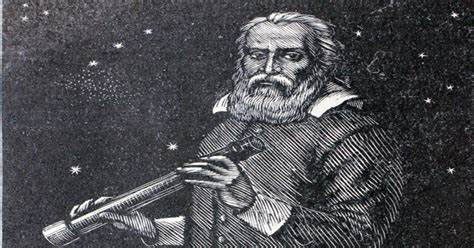
1564 to 1642 Italian astronomer, physicist, mathematician who made significant contributions to the scientific revolution.
best known for his improvements to the telescope and for his astronomical observations, including the discovery of Jupiter’s four largest moons, the phases of Venus, and the detailed study of sunspots. Galileo’s work laid the foundation for modern physics and astronomy, and he is often referred to as the “father of modern observational astronomy” and the “father of modern physics”. His advocacy for the Copernican system, which posited that the Earth revolves around the Sun, led to significant conflict with the Catholic Church.
Galileo’s early works describing scientific instruments include the 1586 tract entitled The Little Balance (La Billancetta) describing an accurate balance to weigh objects in air or water. His early works on dynamics, the science of motion and mechanics were his circa 1590 Pisan De Motu (On Motion) and his circa 1600 Paduan Le Meccaniche (Mechanics). The former was based on Aristotelian–Archimedean fluid dynamics and held that the speed of gravitational fall in a fluid medium was proportional to the excess of a body’s
specific weight over that of the medium, whereby in a vacuum, bodies would fall with speeds in proportion to their specific weights. It also subscribed to the
Philoponan impetus dynamics in which impetus is self-dissipating and free-fall in a vacuum would have an essential terminal speed according to specific weight after an initial period of acceleration.
Galileo’s 1610 The Starry Messenger was the first scientific treatise to be published based on observations made through a telescope. It reported his discoveries of:
- the Galilean moons around
- the roughness of the Moon’s surface
- the existence of a large number of stars invisible to the naked eye, particularly those responsible for the appearance of the Milky Way
- differences between the appearances of the planets and those of the fixed stars—the former appearing as small discs, while the latter appeared as unmagnified points of light
Galileo published a description of sunspots in 1613 entitled Letters on Sunspots suggesting the Sun and heavens are corruptible. The Letters on Sunspots also reported his 1610 telescopic observations of the full set of phases of Venus, and his discovery of the puzzling “appendages” of Saturn and their even more puzzling subsequent disappearance. In 1615, Galileo prepared a manuscript known as the “Letter to the Grand Duchess Christina” which was not published in printed form until 1636. This letter was a revised version of the Letter to Castelli, which was denounced to the Inquisition by Niccolò Lorini. In 1616, after the order by the Inquisition for Galileo not to hold or defend the Copernican position, Galileo wrote the “Discourse on the Tides” (Discorso sul flusso e il reflusso del mare) based on the Copernican earth, in the form of a private letter to Cardinal Orsini. In 1619, Mario Guiducci, a pupil of Galileo’s, published a lecture written largely by Galileo under the title Discourse on the Comets (Discorso Delle Comete), arguing against the Jesuit interpretation of comets.
In 1623, Galileo published The Assayer—Il Saggiatore, which attacked theories based on Aristotle’s authority and promoted experimentation and the mathematical formulation of scientific ideas. The book was highly successful; Pope Urban was “so charmed by it as to have it read aloud to him at table.” Following the success of The Assayer, Galileo published the Dialogue Concerning the Two Chief World Systems. In 1632. Despite taking care to adhere to the Inquisition’s 1616 instructions, the claims in the book favouring Copernican theory and a non-geocentric model of the solar system led to Galileo being tried and banned from publication. Despite the publication ban, Galileo published his Discourses and Mathematical Demonstrations Relating to Two New Sciences, in 1638 in Holland, outside the jurisdiction of the Inquisition. He published dozens of essays on all subjects.
In the last years of his life, Galileo Galilei kept a library of at least 598 volumes (560 of which have been identified) at Villa Il Gioiello, on the outskirts of Florence. Under the restrictions of house arrest, he was forbidden to write or publish his ideas. However, he continued to receive visitors right up to his death and it was through them that he remained supplied with the latest scientific texts from Northern Europe.
6_NICOLAS COPERNICUS
1473 to 1543 BCE
Polymath who formulated a model of the Universe placing the Sun at the center, rather than the Earth. He lived and died in Prussia (Poland). He was a physician, scholar, translator, diplomat and economist deriving a theory of money. Copernicus was a pupil of Albert Brudzewski, who was a professor of Aristotelian philosophy but taught astronomy privately outside the university
In the winter semester of 1491–92 Copernicus, as “Nicolaus Nicolai de Thuronia”, matriculated together with his brother Andrew at the University of Kraków. Copernicus’s Kraków studies gave him a thorough grounding in the mathematical astronomy taught at the university (arithmetic, geometry, geometric optics, cosmography, theoretical and computational astronomy) and a good knowledge of the philosophical and natural-science writings of Aristotle.
Some time before 1514, Copernicus wrote an initial outline of his heliocentric theory known only from later transcripts, by the title Nicolai Copernici de hypothesibus motuum coelestium a se constitutis commentariolus—commonly referred to as the Commentariolus. It was a succinct theoretical description of the world’s heliocentric mechanism, without mathematical apparatus, and differed in some important details of geometric construction from De revolutionibus; but it was already based on the same assumptions regarding Earth’s triple motions.
In 1533, Johann Widmanstetter, secretary to Pope Clement VII, explained Copernicus’s heliocentric system to the Pope and two cardinals. The Pope was so pleased that he gave Widmanstetter a valuable gift. In 1535 Bernard Wapowski wrote a letter to a gentleman in Vienna, urging him to publish an enclosed almanac, which he claimed had been written by Copernicus. This is the only mention of a Copernicus almanac in the historical records. The “almanac” was likely Copernicus’s tables of planetary positions. Wapowski’s letter mentions Copernicus’s theory about the motions of the Earth.
Some of Copernicus’s close friends turned Protestant, but Copernicus never showed a tendency in that direction. The first attacks on him came from Protestants. Wilhelm Gnapheus, a Dutch refugee settled in Elbląg, wrote a comedy in Latin, Morosophus (The Foolish Sage), and staged it at the Latin school that he had established there. In the play, Copernicus was caricatured as the eponymous Morosophus, a haughty, cold, aloof man who dabbled in astrology, considered himself inspired by God, and was rumored to have written a large work that was moldering in a chest.
Nevertheless, in 1551, eight years after Copernicus’s death, astronomer Erasmus Reinhold published, under the sponsorship of Copernicus’s former military adversary, the Protestant Duke Albert, the Prussian Tables, a set of astronomical tables based on Copernicus’s work. Astronomers and astrologers quickly adopted it in place of its predecessors.
At about 1532, Copernicus had basically completed his work on the manuscript of Dē revolutionibus orbium coelestium; but despite urging by his closest friends, he resisted openly publishing his views, not wishing—as he confessed—to risk the scorn “to which he would expose himself on account of the novelty and incomprehensibility of his theses.”
Cardinal Nikolaus von Schönberg, Archbishop of Capua, wrote to Copernicus from Rome:
Some years ago word reached me concerning your proficiency, of which everybody constantly spoke. At that time I began to have a very high regard for you … For I had learned that you had not merely mastered the discoveries of the ancient astronomers uncommonly well but had also formulated a new cosmology. In it you maintain that the earth moves; that the sun occupies the lowest, and thus the central, place in the universe … Therefore with the utmost earnestness I entreat you, most learned sir, unless I inconvenience you, to communicate this discovery of yours to scholars, and at the earliest possible moment to send me your writings on the sphere of the universe together with the tables and whatever else you have that is relevant to this subject .
7_EVENT HORIZON
Many science presentations are narrated by John Michael Godier
Black holes begin not as eternal voids but as stars—massive, burning, brilliant stars. For millions of years, these stellar giants live in a delicate balance, their immense gravity pulling inward while nuclear fusion pushes outward, releasing energy that shines across the cosmos. Yet even stars have lifespans, and when the fuel is exhausted, gravity wins the final battle. The star collapses in on itself, crushing its own matter into unimaginable density.
For stars more than about twenty times the mass of our Sun, this collapse does not stop with a neutron star. Instead, the inward fall continues until nothing can halt it. Matter compresses to a point of infinite density, a singularity. Around that singularity, space-time itself caves in, forming a black hole. This is no longer a star. It is the most extreme object in the universe, where gravity is so absolute that even light cannot escape.
From a distance, the black hole appears deceptively simple—a sphere of darkness surrounded by brilliant accretion disks of hot gas spiraling inward. But up close, its true nature emerges. It has no surface, no edge in the traditional sense. Instead, it has the event horizon. Beyond this horizon lies a world forever hidden from us, sealed off not by distance but by the laws of physics themselves.
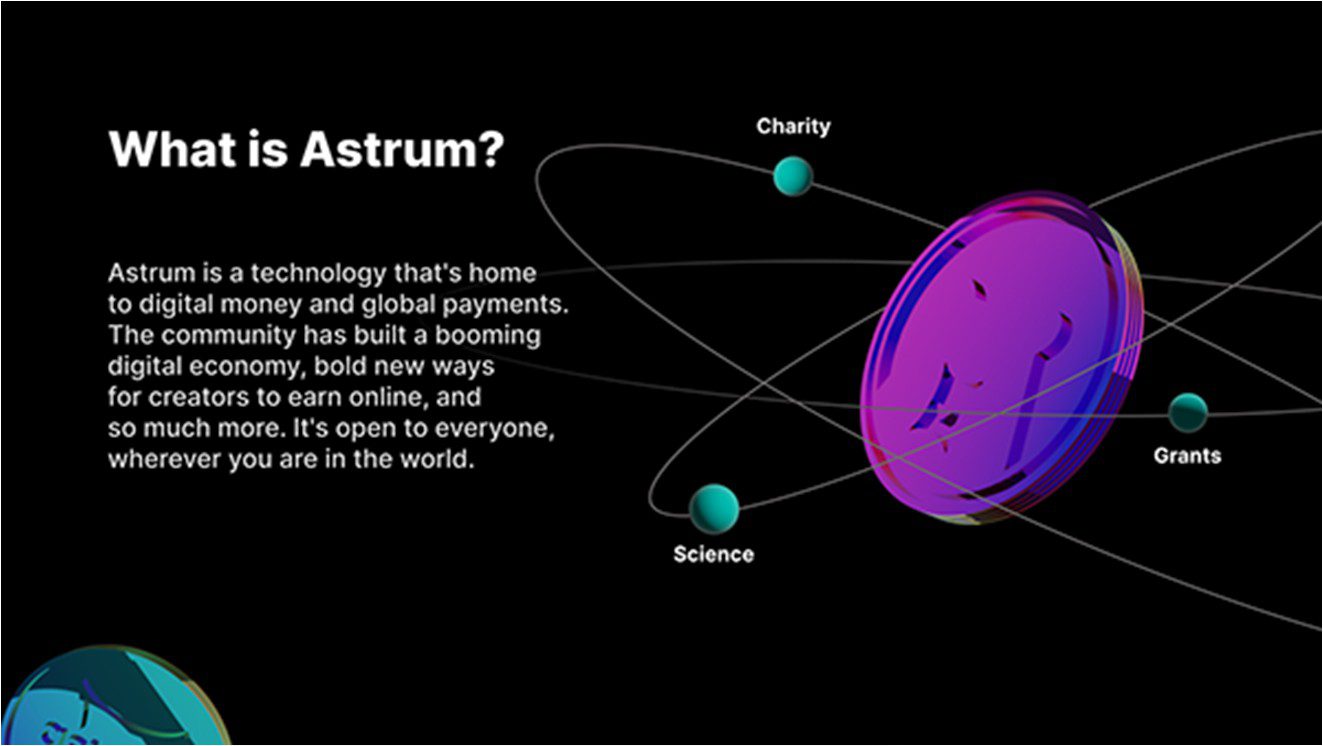
8_ASTRUM
All things science
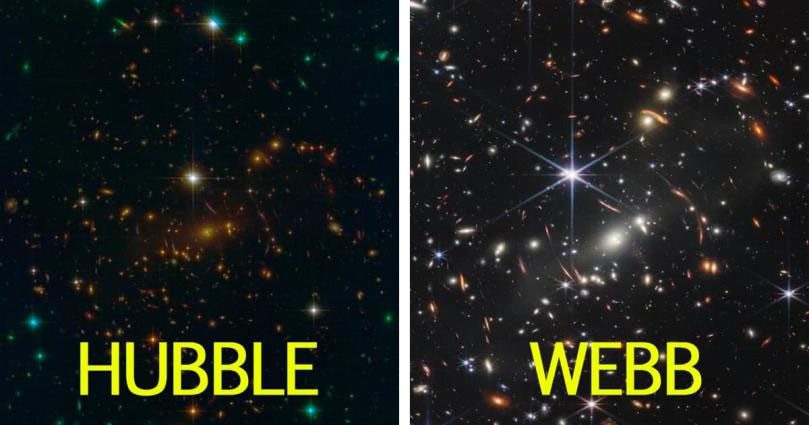
9_HUBBLE WEBB
All things space
10_JAMES GARDNER
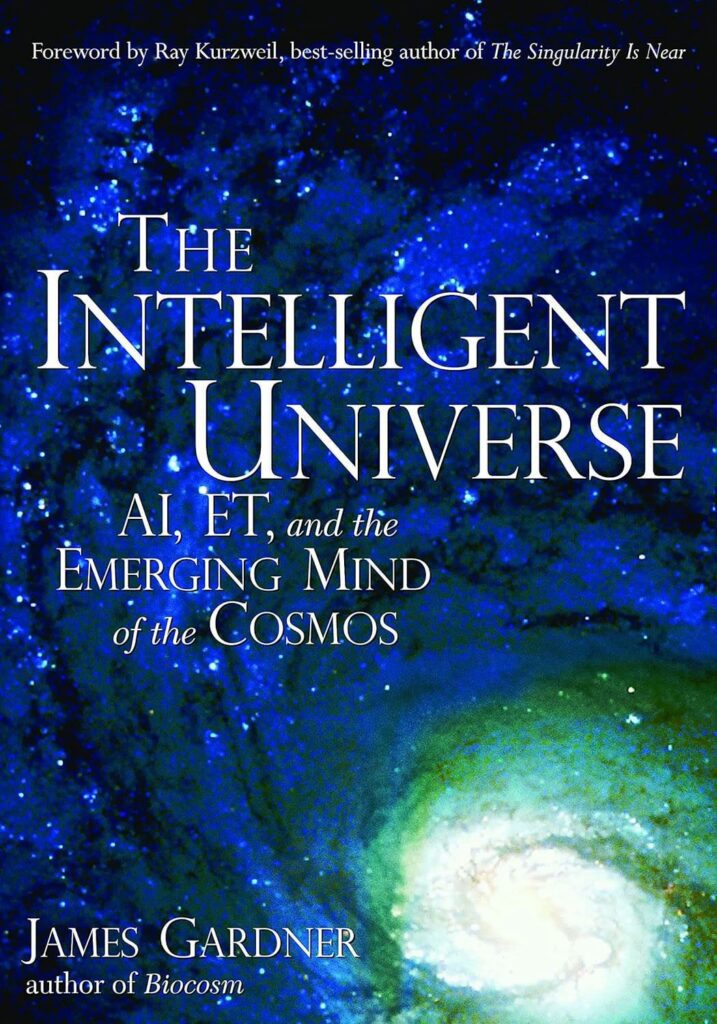
Space up close
Esoterica, Spark, Religion for breakfast, The funny thing about religion.
Mythvision podcast
The path of the sun god,
Have a happy day and don’t forget to pass on a hug.