Chapter 1
Phylosophy
Chapter 1
Phylosophy
(Greek for Phylo is Love of, and of Sofia is Goddess of Wisdom) The love of wisdom.
MENU
1_SOCRATES
2_PLATO
3_ARISTOTLE
4_PRESOCRATIC
5_ANIMAXAMANDER
6_ARCHIMEDES
7_DEMOCRITUS
8_THALES
9_PYTHAGORAS
10_JOE FOLEY
11_ALEX OCONNOR
12_YUVAL HARARI
13_MARCUS AURELIUS
14_EPICURUS
15_EPICURISM
16_VOLTAIRE
17_SPINOZA
18_DESCARTE
1_SOCRATES
to 399 BCE
Socrates wrote nothing. His teachings were only recorded by his students, notably Plato, who wrote of Socrates writing parables and stories of a paradoxical existence. His overriding philosophy was to question everything, including why do we think the Gods exist, if they do not show themselves. He was tried and convicted for corrupting the youth, and Heresy of the Gods. Sentence of death would be suspended if he exiled. He refused and drank hemlock poison.
2_PLATO
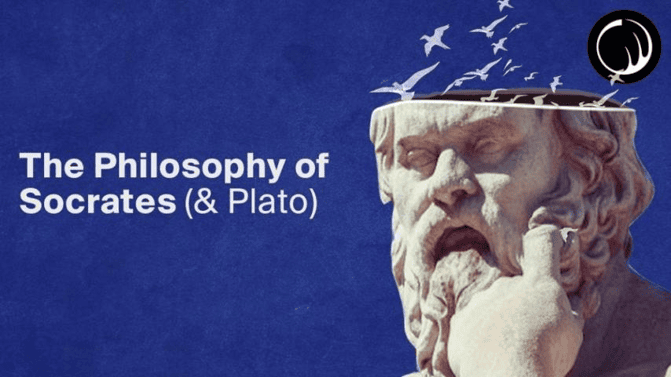
428 BCE to
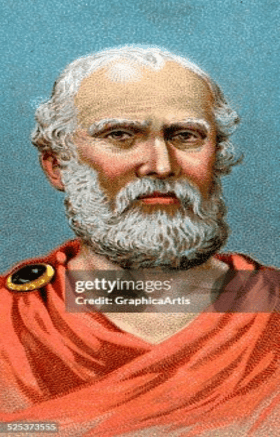
Born of Athenian aristocracy Plato tutored and mentored Aristotle at Plato’s university called ‘The Academy’ (academics). Plato as a young Greek man was tutored and influenced by Socrates until Socrates was sentenced to death in 399 BCE. He went on to write of Socrates teachings in a series of works including his masterpiece treatise of an ideally just society called ‘The Republic’
Plato founded his school called ‘The Academy’ and drew many talented youth to his side (disciples), where he mentored justice beauty and equality, to achieve ethics and morals. His many works include discussions in all of nature, and of life’s thoughts and activities.
3_ARISTOTLE
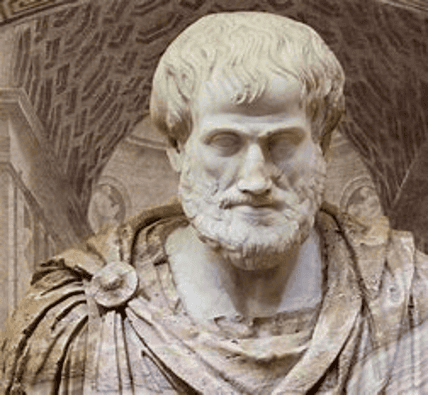
384 to 322 BCE Greek philosopher who wrote on the natural sciences, philosophy, linguistics, economics, politics, psychology and the arts. He was brought up by a guardian and at 18 he enrolled for 20 years, in Plato’s Academy in Athens.
After his mentor and teacher Plato died he was summoned by King Phillip of Macedonia to tutor his son. Alexander (as in Alexander the Great) He established a library in the Lyceum where he produced hundreds of books on papyrus scrolls.
He produced a synthesis of known pre-socratic philosophies existing prior to him influencing Judeo, Islamic and Later Christian theologies. He has been referred to by Arab scholars as ‘the first teacher’, by Christian scholars as ‘the philosopher’ and others as ‘the first scientist’.
He coined the term ‘logos’, meaning, discourse, analytics, logic and reason as a contrast to ‘mythos’ meaning believe in myths and magic.
4_PRESOCRATIC
Ancient people began to question: why, where, when, who and how. Many curious individuals began to seek answers. There were those who studied nature and tried to discover our realities and seek meaning. Some of these great thinkers posited answers through human nature. Others used myth and passed down stories to portend unknown influences, with purposes, that create unexplained events.
5_ANIMAXAMANDER
610 to 546 BCE
Greek philosopher Anaximander, was as a pupil of Thales, and was the first to develop a Cosmology, or Systematic view of the world.
He developed a shadow causing rod to demonstrate the equinoxes and solstices and possible hours in a day. He mapped the known world and built a celestial globe, though he thought the earth was flat and is held in place by being equal distance from everything else.
He may have been the first evolutionist due to his view that every living thing comes from something else. He points out that man could not have survived until now due his (her) long period of nurture. There had to be a pre something else.He investigated the causes of rain, wind and lightning and denied Thales idea on water to ‘the infinite’ where everything is in motion and the world will eventually destroy itself. His efforts to provide a rational explanation of the world, has had a lasting influence.
6_ARCHIMEDES
287 to 212 BCE
The lever or pry bar, was of course used for eons to pry and lift things. The lever assisted human kind to build shelters, make paths and roads and monuments. Most of all, the lever pried open the door to new thinking and served as a fundamental principle to countless technological inventions. Archimedes of Syracus, was a prominent Greek mathematician, physicist, engineer, astronomer and inventor. He invented the lever, and famously said, ‘Give me a solid surface to stand on and a big enough lever, I can lift the world.’
7_DEMOCRITUS
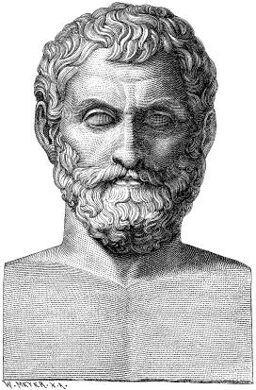
460-370 BCE
Greek known for his ‘atomic theory of the Universe’ proposing that everything is composed of small indivisible particles called ‘atoms’. Primarily focusing on ethics, mathematics and cosmology, he was known as ‘the laughing philosopher’ due to his belief that happiness is the ultimate goal of life. Many great quotations.
8_THALES
287 to 212 BCE
Known for his wisdom, as the first philosopher, and one of ‘the seven wise sages’, of ancient Greece. He broke with the current tradition of using mythology to explain the world instead of using natural philosophy. He first engaged in mathematics, geometry, science and deductive reasoning.
Thales theorized that all of nature is based on water. He calculated he height of the pyramids and a ship’s distance from the shore. He predicted a solar eclipse, and predicted weather events. Thales alone raised philosophy from mere speculation to practice. (Logos vs Mythos)
9_PYTHAGORAS
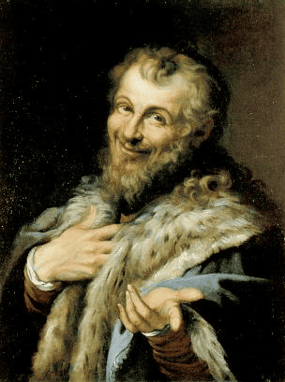
570 to 490 BCE
Pythagoras of Samos was a Greek polymath, philosopher, astronomer who believed every soul to be immortal and will enter a new body after death.
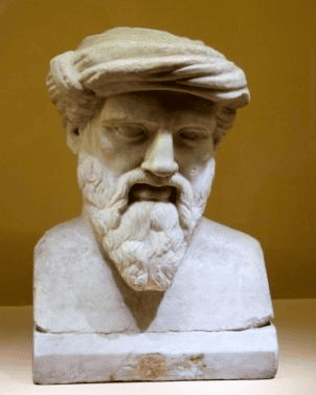
He believed that planets move in a harmony of spheres to mathematical ratios and that all of nature moves to a musical flow. He founded a school called the‘semi-circle’ to tutor the brightest minds.
10_JOE FOLEY
Joesephfolley@substack.com or unsolicited advise

Joe Folley, based in Cambridge, GB, is a Founder at Unsolicited Advice. Joe Folley brings experience from previous roles at The Perse School, Cambridge. He holds a 2022 – 2023 Master of Philosophy and MPhil in Philosophy (specialising in logic) @ University of Cambridge. His philosophical views are easy to absorb as he answers difficult questions.Joe produces easy to follow multimedia presentations. U-Tube is easiest to start with his debating other atheist and theist philosophers.
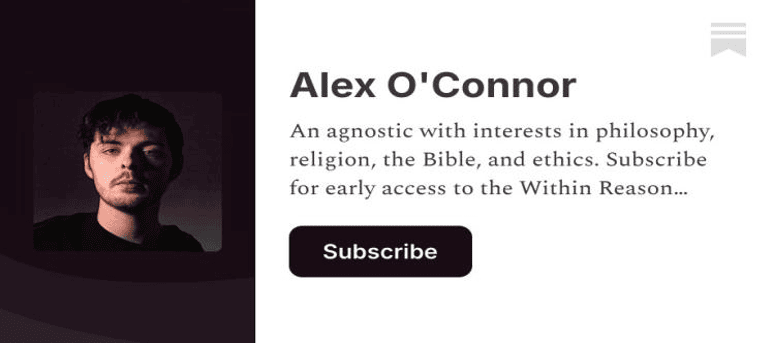
11_ALEX OCONNOR
www.alexoconnor.com(opens in new tab)
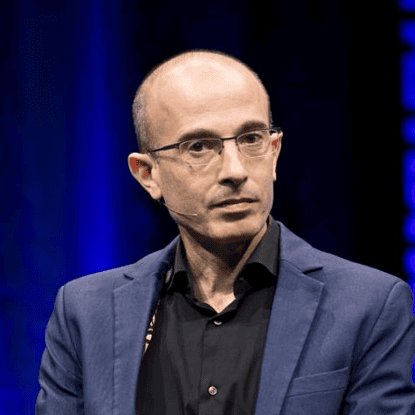
Popular lecturer, U-tube Sceptic and agnostic Atheist. Explains complicated biblical questions in a local logical chronology.
Alex O’Connor is a You Tuber, writer, and public speaker, and host of the Within Reason Podcast, with over 1.5 million subscribers on YouTube.
He has appeared on television programmes including Piers Morgan Uncensored, BBC Sunday Morning Live, and Channel 4 News, and has debated and discussed issues including the philosophy of religion, Biblical scholarship, free speech, and monarchy abolitionism with people such as Jordan Peterson, Penn Badgley, Richard Dawkins, Rainn Wilson, Ben Shapiro, Neil deGrasse Tyson, and Slavoj Zizek.
12_YUVAL HARARI
Ynharari.com(opens in new tab)
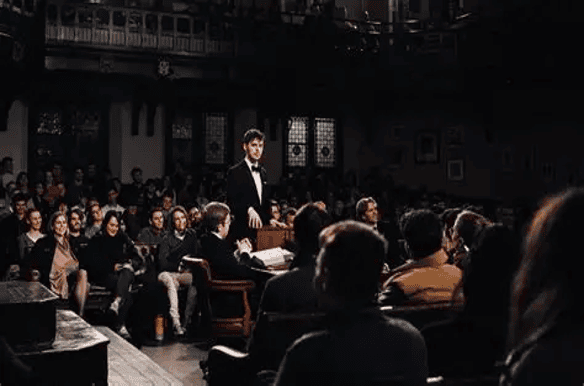
Historian, philosopher and the author of the bestsellers “Sapiens: A Brief History of Humankind”, “Homo Deus: A Brief History of Tomorrow”, and “21 Lessons for the 21st Century” and Nexus: A Brief History of Information Networks from the Stone Age to AI. Co-Founder of Sapienship, a social impact company with projects in the fields of education and storytelling, whose main goal is to tell and retell our shared human story. PhD from the University of Oxford in 2002. Has been a lecturer at the Department of History in the Hebrew University of Jerusalem, and a Distinguished Research Fellow at the University of Cambridge’s Centre for the Study of Existential Risk. His books have sold more than 50 million copies worldwide in 65 languages.
His research focuses on macro-historical questions such as: What is the relationship between history and biology? What is the essential difference between Homo sapiens and other animals? Is there justice in history? Does history have a direction? Did people become happier as history unfolded? What ethical questions do science and technology raise in the 21st century?
Lectures around the world on the topics explored in books and articles; has written for publications such as the Guardian, Financial Times, the New York Times, the Atlantic, the Economist and Nature magazine. Also offers knowledge and time to various organisations and audiences on a voluntary basis. Recipient of various honours and awards.
13_MARCUS AURELIUS
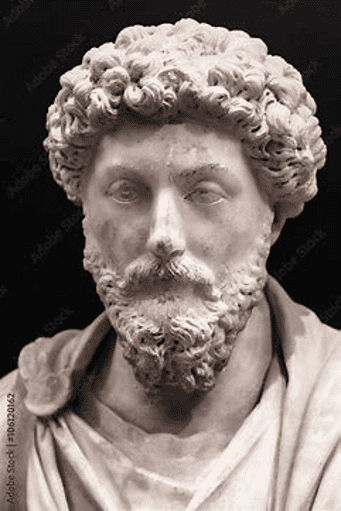
Roman Emperor 161 AD to 180 AD. Known as ‘the last of the Good Roman Emperors’. Marcus Aurelius. So powerful he could have anything he wanted. ANYTHING! But his position, and life itself, was always under siege from usurpers, as it was with every other Roman Emperor.
He kept a diary and wrote of his daily trials and tribulations of; what he learns, what he thinks about it, and what he does, later assembled by historians and called, ‘The meditations’. He wrote in private to himself, not thinking anyone would ever find them. He is obviously lonely and has no one he can trust. He wrote in the elite Roman language Greek, and was influenced by ancient philosophers such as, ‘Epicurus and Socrates’.
He was the opposite of ‘Power corrupts, and absolute power corrupts absolutely’. He reveals the man under the body. He writes of; Socratic scepticism, virtue, living in accordance with nature, know the things you can and cannot control, taking full responsibility and living in the present. He ruled for 19 years, more than the majority of 180 Roman Emperors.
He made notations in his diary such as,
“To love only what happens, what was destined, No greater harmony.
The happiness of life depends upon the quality of thoughts.
Everything we hear is an opinion, not a fact. Everything we see is a perspective not the truth.
Accept the things to which fate binds you, and love the people with whom fate brings you together, but do so with all your heart.
Dwell on the beauty of life. Watch the stars, and see yourself running with them.
It is not death that a man should fear, but he should fear never beginning to live.
Be tolerant with others and strict with yourself.
The soul becomes dyed with the colour of its thoughts.
You have power over your mind, not outside events. Realise this and you will find strength.” Etc, etc.“The object of life is not to be on the side of the majority, but to escape finding oneself in the ranks of the insane.”
Does this sound like the most powerful man in the entire world? He also wrote many letters to himself such as;
“When you wake up in the morning, tell yourself: the people I deal with today will be meddling, ungrateful, arrogant, dishonest, jealous and surly. They are like this because they can’t tell good from evil. But I have seen the beauty of good, and the ugliness of evil, and have recognised that the wrongdoer has a nature related to my own, not of the same blood and birth. but the same mind, and possessing a share of the divine. And so, none of them can hurt me. No one can implicate me in ugliness. Nor can I feel angry at my relative, or hate him. We were born to work together like feet, hands and eyes, like the two rows of teeth, upper and lower. To obstruct each other is unnatural. To feel anger at someone, to turn your back on him: these are unnatural.”
14_EPICURUS
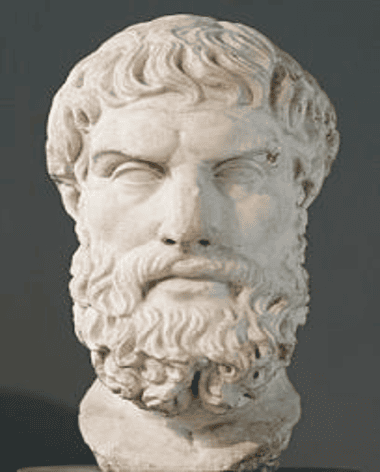
Epicurus was born into slavery 5 centuries before Marcus. He was Greek and Socratic in his sceptical thinking and left his book ‘On Nature’ consisting of 37 lectures kept at the National Library of Naples, including his letters to Herodotus. ‘No one knows the right path, or even if there is a right path’, ‘The most Pleasure with the least pain is the only good’ (hedonism). Marcus and him may have gotten along quite well, a slave and an Emperor.
Don’t fear God, don’t worry about death, what is good is easy to get, and what it terrible is easy to endure.Reason and empirical evidence.
If God is omnipotent, and God is good, why does evil exist?
He formed a school in Athens with the simple philosophy of ethical pleasure, friendship, and retirement. Mental pleasure was regarded more highly than physical and the ultimate freedom.
Epicurians, believe that all desires were derived from 3 main sources those natural desires that are essential for life such as,
A_Food and shelter.
B_Those natural desires that one can live without, primarily ones that cause jealousy and boredom.
C_Lastly, narcissistic desires such as wealth and fame.
One of his most important aims was to liberate people from fearing the eventual end of one’s life, thereby enabling them to seek both happiness and fullfilment in life. ‘One ceases to exist when one chooses to fear death’. As a following to Democritus’s teachings there are five fundamental truths in Epicurism:
1_There are no divine beings that can threaten us
2_There is no afterlife
3_What we actually need is easy to obtain
4_What makes us suffer is easy to endure.5_All that exists in the entire universe is composed of ‘atoms’ and space. The body and mind even one’s soul is composed of atoms. On our passing the body is reduced to nothing more than decomposing atoms. Death should not be feared. Me: There is no one up there, that gives a hoot about what any of us are doing down here.
15_EPICURISM
1_To achieve Greatness, Virtue is enough. Do right.
2_In Dante Alighieri’s ‘Divine Comedy’ the Epicureans are depicted as heretics suffering in the sixth circle of hell. In fact, Epicurus appears to represent the ultimate heresy.
3_Francis Bacon wrote an apothegm related to Epicurism:There was an Epicurean vaunted, that divers of other sects of philosophers did after turn Epicureans, but there was never any Epicurean that turned to any other sect. Whereupon a philosopher that was of another sect, said; The reason was plain, for that cocks may be made capons, but capons could never be made cocks.This echoed what the Academic skeptic philosopher Arcesilaus had said when asked “why it was that pupils from all the other schools went over to Epicurus, but converts were never made from the Epicureans?” to which he responded: “Because men may become eunuchs, but a eunuch never becomes a man.”
16_VOLTAIRE
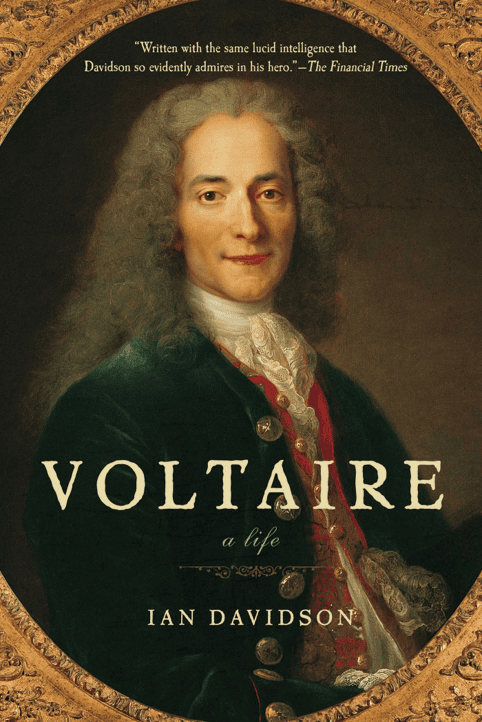
Fançois-Marie Arouet, known by his pen name Voltaire, was a French Enlightenment writer, philosopher, and satirist famed for his wit, defense of civil liberties, and critiques of religious dogma and tyranny. Author of over 2,000 works, including the satirical masterpiece Candide, he championed freedom of speech, religious tolerance, and separation of church and state, influencing revolutionary thought in France and beyond.
United with other thinkers of his day—literary men and scientists—in the belief in the efficacy of reason, Voltaire was a philosophe, as the 18th century termed it. In the salons, he professed an aggressive Deism, which scandalized the devout.
He became interested in England, the country that tolerated freedom of thought; he visited the Tory leader Viscount Bolingbroke, exiled in France—a politician, an orator, and a philosopher whom Voltaire admired to the point of comparing him to Cicero. On Bolingbroke’s advice he learned English in order to read the philosophical works of John Locke.
His intellectual development was furthered by an accident: as the result of a quarrel with a member of one of the leading French families, the chevalier de Rohan, who had made fun of his adopted name, he was beaten up, taken to the Bastille, and then conducted to Calais on May 5, 1726, whence he set out for London. His destiny was now exile and opposition.
Throughout his life, Voltaire frequented the great of this world and monarchs, but often found himself at odds with the political authorities, which led him to the Bastille twice in his youth, and subsequently to a series of exiles: first to England, then to the commune of Cirey with Émilie du Châtelet, then the Prussian court where he fell out with Frederick II before fleeing Berlin in 1753.
After several months of wandering, forbidden to return to Paris[7], he took refuge in Les Délices on the territory of Geneva, then in 1759 acquired the estate of Ferney, on the border between the kingdom of France and the Republic of Geneva[8]. Returning to Paris in 1778, after an absence of nearly twenty-eight years, he was given a standing ovation by his admirers and died there a few weeks later at the age of 83.
17_SPINOZA
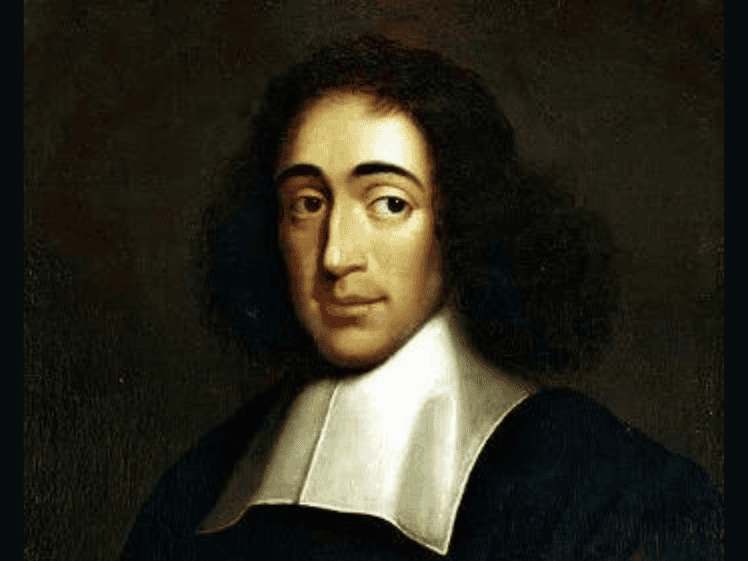
Baruch (Benedictus) de Spinoza was a Dutch‑Sephardic philosopher of the 17th century whose rationalist, monist system identified God with Nature (Deus sive Natura). Excommunicated from Amsterdam’s Portuguese‑Jewish community in 1656 for his unorthodox views, he lived modestly as a lens‑grinder while producing works like the anonymous Theological‑Political Treatise and his posthumous masterpiece Ethics. His thought shaped Enlightenment philosophy, political theory, and biblical criticism.
Bento (in Hebrew, Baruch; in Latin, Benedictus) Spinoza is one of the most important philosophers—and certainly the most radical—of the early modern period. His thought combines a commitment to a number of Cartesian metaphysical and epistemological principles with elements from ancient Stoicism, Hobbes, and medieval Jewish rationalism into a nonetheless highly original system. His extremely naturalistic views on God, the world, the human being and knowledge serve to ground a moral philosophy centered on the control of the passions leading to virtue and happiness. They also lay the foundations for a strongly democratic political thought and a deep critique of the pretensions of Scripture and sectarian religion. Of all the philosophers of the seventeenth century, Spinoza is among the most relevant today.
3. Theological-Political Treatise
3.1 On Religion and Scripture3.2 The State
18_DESCARTE
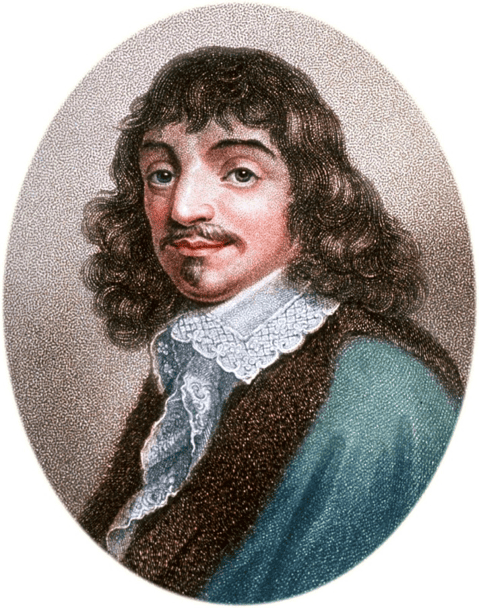
René Descartes was a French philosopher, mathematician, and scientist often called the father of modern philosophy. He pioneered the method of doubt, culminating in his famous dictum “Cogito, ergo sum” (“I think, therefore I am”), and developed Cartesian dualism, distinguishing mind from body. His influence spans epistemology, metaphysics, and mathematics, notably founding analytic geometry and the Cartesian coordinate system.
He was at one of the most renowned schools in Europe but became filled with doubt and with a failed attempt to instruct himself, he soon discovered what he considered to be his own ignorance. Heavily influenced by the ideas of both Galileo (1564-1642) and Copernicus (1473-1543) and their heliocentric view of the universe where the sun, not the earth, was the center of the solar system, Descartes embarked on a long road that would change the very nature of philosophy for generations to come.
During the early 17th century, Europe was undergoing a crucial change in the area of both science and philosophy. Before Descartes’ assertion on the concept of doubt and the transition into rationalism, Aristotelean philosophy and scholasticism dominated Western thought, but science initiated a break from this traditional ideology to one based on an individual’s own power of reason. In this new way of thinking, initiated by Descartes, the old concept of empiricism where knowledge was acquired by the senses or experience was shown to be unreliable. Science placed a strong emphasis on observation, experimentation, and reason. It was the last of these three that enabled Descartes to question everything that he had been taught to believe and motivate his search for truth. Using only the power of reason, he would try to prove his own existence.
19_CLOSER TO THE TRUTH
Closertotruth.com(opens in new tab)
Intimate conversations with scientists, theologists, and proponents about the hardest questions.