
Chapter 5
Amazing Ancients
Chapter 5
Amazing Ancients
MENU
1_PREAMBLE
2_FIRE
3_SHELTER
4_PIGMENTS
5_BEDDING
6_ARROWHEADS
7_PARTNERING
8_NEEDLE
9_POTTERY
10_LACQUER/OARS
11_AGRICULTURE
12_PLOW
13_SERICULTURE
14_THE WHEEL
15_SAILS
16_LANGUAGE
17_WRITTEN LANGUAGE
18_BRONZE/PAPYRUS
19_CRANE
20_CAST IRON
21_CATAPULT
22_SCREW/FERTILIZER
1_PREAMBLE
Psychologist Dean Simonton says; “with rare exceptions, the lone genius is a myth. Creative genius is almost always imbedded in a rich network of predecessors and contemporaries. At the same time, we cannot deny that even in a golden age, some shine brighter than others.” Newton famously said that he “stood on the shoulders of giants”. Even so, he still saw farther than all the rest.
OK, but even crows, chimps, and other critters can use tools, with problem solving intelligence. Let us start somewhere after that unknown period full of unknown heros. The following sample list can only be appreciated through deduction of related evidence.
There were key tipping points in our history that changed our future dramatically. In each case our future was forged by knowledge created through happen chance, discovery or invention.
2_FIRE
ESTIMATED TIME FRAMES: 1,200,000 BCE
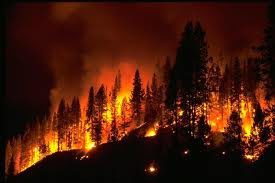
Undoubtably, the first great leap forward was the discovery of fire usage, and then the taming and making of Fire. Fire provided heat in a harsh outdoor environment. It provided light to see the way and open up all forms of darkness. Fire provided protection, signals and so much more. Fire was everything. Fire meant survival in a dangerous and challenging environment. Most of all fire produced easily digested cooked food. This was instrumental in the development of the brain because the huge amount of calories required for digestion could now be diverted to development of the brain.
How was the most important discovery in our genealogical history discovered? If you had a lighter back then, you would be God, until you ran out of lighter fluid. We can only guess at any of these events. What, no cameras?
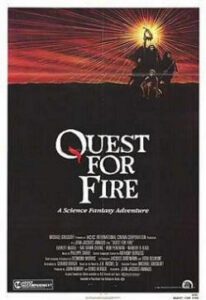
Consider Oog. In his case, he had to find fire and carry it with him. Did you ever see the 1981 movie ‘Quest for Fire’? This radically compressed prehistory sci fi story is a great depiction how one member of the clan has the duty, to keep their most prized possession, which is the slow burning of fire embers, alive and ready for use, in a bone satchel. At all times including camps, hunts, and migrations, he had to safeguard their viability to have fire. The lives of all related members depended on it. They knew how to tend it and how to us it, but not how to make it. I challenge you to start a fire, in a safe outdoor area by not using any man-made materials. This means no lighters, matches, fire starters, nothing but nature. Try it. I have. Don’t cheat.
Excavations from the Wonderwerk Cave in South Africa uncovered an extensive record of human occupation that may go back up to a million years ago and shows the clear use of fire over extended periods of time. The Cave provided evidence of easily digestible cooked meat being eaten, allowing our hungry ancestors to evolve larger, more calorie enriched brains, and bodies. Scraped bones also show the tools they used and the tooth marks across the bone show the animal involved.
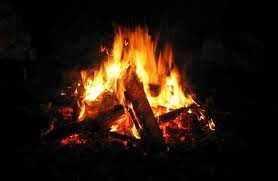
At some point someone, somewhere, a long lost first hero from the past, noticed a spark appearing when a certain type of rock (flint) emitted a spark when hit correctly by another specific rock. This may have happened countless times, but one time conditions were different. Dry tinder was close, the wind was suitable, no rain, and the spark caught fire. What a huge revelation this must have been. It was perhaps the very first technological breakthrough in our history. How would you feel if you discovered an ability thought only to exist with the Gods? You no longer had to fear the darkness and a new dawn could arise. You saw the breeze open the flame, so you blew on it. You had control over fire.
A new reality came about by circumstance. With flexible articulating limbs and our big brains, our lives changed forever, All the way to you and me. My guess is, our prehistoric ancestors came across fire residues and found strikingly aromatic cooked meat laying right in front of them, not running, not fighting, just bringing new nourishment to a calorie starved brain.
They would have discovered a way of transporting the fire to use in their nomadic search for food. Perhaps in a herbivore dung-pie, and they found cooked meat easy to eat and digest, which literally fed a lifelong quest for the perfect hamburger. Wally Burger and White Spot.
The creative part to make fire was in the far future. Someone somewhere, chipped a piece of flint onto dry debris or furiously rubbed the right wooden stick against another. It lit. The making of fire happened. OMG! We could make fire when we needed it. How many of us could do the same, even if we knew the procedure?
Like my dear pal Jim told me ‘life is not a straight line, lots of curves and dipsy doodles’. This would have been the start of a very long trek that eventually saw other tools and fire hardened weapons emerge from accidental and happen chance events. Time is relative, there was no rush. Things happened when they happened. It was just that we were there with our abilities and our big brain to take advantage of the odd beneficial event. There was more to the fire than just the fire. We had found a way to light our world with new ideas that produced better weapons to hunt with, better clothing and shelter from the elements, and more confidence to survive.
3_SHELTER 500,000 BCE
Caves, nooks, trees and debris were the only shelters available. However the process of building a shelter is complicated. One needs to immerse oneself from the elements in a comfort that is warm, dry and safe. Some unknown people figured out that if they gathered twigs, sticks, rocks, mud, and other natural materials, they could arrange them in structures to protect against foul, cold, hot and wet weather, hungry predators, enemies and other dangerous elements.
Obviously a long way from the comforts we have today. Could you build a similar shelter, given similar circumstances? I sure would not want to trade places.
4_PIGMENTS 300,000 BCE
Archaeologists in Twin Peaks Zambia and South Africa discovered numerous ancient pigments, red Ochre yellow, brown and others. Believed to be used for aesthetic purposes, body decoration and cave painting. Who would have thunk?
5_BEDDING 77,000 BCE
In the well known Border Cave in South Africa archaeologists found evidence that ancient humans were making comfortable bed mats spread over ashes. It is suspected the ashes protected people from crawling insects. Nice to sleep in some comfort.
6_ARROWHEADS
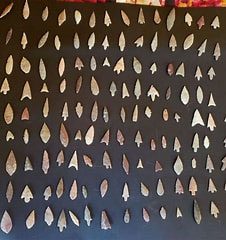
Bone arrowheads have been found throughout most of the world covering thousands of years. Because bows and arrows are predominantly made of organic materials, little evidence of these weapons survive. The earliest sites harboured many arrow tips and barbs.
Bow and arrow technology gives hunters a unique advantage over their prey. They can hunt from a safe distance and from a concealed position when stalking dangerous prey.
The bow and arrow consists of multiple parts, each with a particular function to function together to make hunting possible. This kind of symbiotic technology requires a high degree of ‘cognitive flexibility’ to think of multiple concepts simultaneously.
Later technology spawned the napping of stones to create a sharp penetrating point and then dipping the heads in poison.
7_PARTNERING
Around these times, humans and animals began to find some common causes. My assumption being: that humans would have the upper hand in any partnership. Animals became important to humans, they provided protection, warning, companionship, plus high protein by-products, and meat. Wolves cooperated in tracking and hunting as a pack. All dogs, our loveable, faithful, wonderful, companions, evolved from a species of wolf that long ago went extinct.

8_SEWING NEEDLE 64,000 BCE
This was a time when hunters first learned the art of sewing by using bone needles to convert animal skins into clothing and bedding, and to protect themselves from the cold.
Reindeer tendons and sinew were separated by holding the sinew with their teeth, and stripping it into long threads using another tool in a highly difficult procedure. The eye was made using a bone awl and drilling from both sides. Buttons were formed by awling a shaped disc of bone.
It was also the time when evidence of flint tools was found, across a wide variety of habitats.
9_ POTTERY 18,000 BCE
Open firing techniques with temperatures from 600 to 900 Celsius, were used in different locations at different times to harden preformed clays. There are several ways to date pottery, sometimes even to the month. Several minds thought alike.
The invention of the kiln in Mesopotania about 6,000 BC, made harder more durable pottery.
10_LAQUER AND ROWING OARS IN CHINA 4,500 BCE
11_AGRICULTURE
The Assyrian city of Arslantepe has been inhabited since the development of agriculture in the Sumerian fertile crescent nearly 6,000 years ago. Who could have discovered the knowledge of seasonal growing seasons, that seeds of plants grew new plants if tended to, and when to harvest, use, cook and preserve foods? Will anyone ever know?

12_PLOW
At some point, in that ancient time, some genius forged metal into a shape to dig up and prepare soil by aerating it for the planting of seeds, to incorporate crop residues, manures and limestone into the soil and to disturb the growth of weeds. First were hand held impliments, like sticks and then hoes. With the domestication of animals, the plow’s work could be magnified and major crops could be grown.

13_SERICULTURE IN CHINA 3,630 BCE
14_THE WHEEL 3.500 BCE
The invention of the wheel was a monumental achievement in human history enabling us to conquer distances, transport goods and shape the world as we know it. Other than the taming of fire, the wheel is the most ubiquitous and important invention in our long history. There are few significant inventions since then that are of equal importance. Can you imagine a world without wheels? Movement by air, land, sea and even space would be impossible.
The wheel is the mechanical invention of all time. The wheel has been a basic element of nearly every machine constructed by mankind. Its beginnings can be seen across ancient civilizations. Maybe someone noticed a round rock or log rolling down a slope and found it was a lot easier to roll a round log than a square stump. It may have been used to spin clay for potters to form other useful goods. Evidence shows that the wheel as a technology for transportation came about 3700 BCE. in early Mesopotamian chariots and wagons. Wheels with spokes emerged in Egypt around 2000 BCE. The wheel launched humans on a ship of imagination unlike anything else.
Ancient transport wheels first found in Sumeria, (modern day Iraq) were assembled when someone invented rotating axles, then inserting them into perfectly centered and smooth solid wooden discs. Other cultures, aligning with the taming of horses later followed suit. It was obvious that if the wheel was lighter it would work better, so carving out pieces of wood worked, eventually ending up with spokes.
The earliest wheels were potter’s wheels to more efficiently shape clay.
15_SAILS IN EGYPT 3,200 BCE
16_LANGUAGE
Because the emergence of language is located so far back in human prehistory, the relevant developments have left no direct historical traces. The time range for the evolution of language extends, at least in principle, from 2.3 to 2.4 million years ago to the emergence of full behavioral modernity some 15,000 – 50,000 years ago. First, the physical anatomy of the speaker had to be developed and early humans did not have the vocal and neural constituents to compose and vocalize words. Parts of language may have originated with gesturing and the associated sounds of pain, pleasure, urgency etc. I cannot doubt that language owes its origin to the imitation and modification, aided by signs and gestures of various natural sounds, the voices of other animals, and man’s own instinctive cries. Few animals can smack their lips. We and Bonobos can.
Charles Darwin, 1871. The Descent of Man, and Selection in Relation to Sex. There is no doubt that the ability to communicate feelings, interests, and knowledge through language moved the human journey forward at lightning speed compared to its past rate of development. Language meant ideas, bonds and cooperation. Life could be shared with others and a new meaning for life ensued.
17_WRITTEN LANGUAGE 3,000 BCE
Speech, writing and signing are three distinct components of language. They serve as a means for recording of events, ideas, data and feelings and is distinct from spoken language as it requires distinctive skill in writing and reading to access and utilize effectively. Oral language is innate, while written language requires specific education.
There are no written languages that do not have a spoken, or body language counterpart that they emerged from.
Spoken or signed languages change faster than written language, resulting in archaic features or spellings that don’t reflect contemporary speech.
Scholars mark the difference between history and prehistory by the invention of written language. The first of these were in Egypt and Sumeria where hieroglyphs and cuneiform were invented.
1_Cuneiform, is performed by imprinting a wedge shaped tool into damp clay, first denoting pictograms, and later ideograms, which evolved into a comprehensive written language.
2_Hieroglyphs could only be deciphered when in the 19th century CE, The Rosetta stone was found. It was written in Cuneiform, Hieroglyphs and Greek and was found to be a trade agreement. The Hieroglyphs were thus easily deciphered.
3_The Chinese script evolved from oracle bone inscriptions used for divinity purposes primarily from pictograms and ideograms.
Writing preserved the transmission of culture, history and knowledge across time and space developing complex systems of laws, administration and education, such as the Code of Hammurabi. He received these codes direct from the God Shamas.
18_BRONZE IN MESOPOTAMIA, PAPYRUS IN EGYPT 3,000 BCE
19_CRANE IN EGYPT 600 BCE
20_CAST IRON, CROSSBOW IN CHINA AND GREECE 500 BCE
21_CATAPULT IN GREECE 421 BCE
22_WHEELBARROW IN ATTICA 408 BCE
SCREW FERTILIZER, CEMENT
Quote: Cowards die many times before their deaths; The valiant never taste of death but once.
Of all the wonders that I yet have heard,
It seems to me most strange that men should fear; Seeing that death, a necessary end,
Will come when it will come.
To-morrow, and to-morrow, and to-morrow, Creeps in this petty pace from day to day,
To the last syllable of recorded time; And all our yesterdays have lighted fools
The way to dusty death. Out, out brief candle.
Life’s but a walking shadow, a poor player That struts and frets his hour upon the stage And then is heard no more; it is a tale
Told by an idiot, full of sound and fury, Signifying nothing.
The miserable have no other medicine, But only hope.

have a happy day