
Chapter 3
TIME. TICK TOCK
Chapter 3
TIME. TICK TOCK
MENU
1_TIME AND CHANGE
2_CARBON DATING
3_DENDROCHRONOLOGY
4_ICE CORE
5_THERMO LUMINESCENCE
6_OPTICAL DATING
7_POTASSIUM-ARGON
8_DNA
9_OTHER METHODS
10_EARTH AGE
11_METEORITES
12_ZIRCON DATING
13_GEOLOGICAL RECORD
14_ROCK COLUMN
15_SEDIMENTS
16_GEOLOGIC EVIDENCE
17_UNIVERSE AGE
18_MICROWAVE TEMPS
19_SPECTROSCOPY
20_AGE OF UNIVERSE
In the previous Chronology:
We saw how the fundamental building blocks of all matter in our Universe are created from energy to matter, to all varieties of matter. We showed the four forces of Physics: electromagnetism, gravity, fusion and fission and how they created everything that is, from stars and planets to all of our physical reality.
1_TIME AND CHANGE

The thing is, the phenomenon of time as a process takes a very long
time. Not something a human with a 100 year life span can easily wrap their mind around. Everything we think of is in the here, and now, and 100 years is a very long time to us. It is to me. You know, like, what’s for dinner? I could not visualize what I will have for dinner a year from now. 100 years, how many people live that long? We identify with each passing moment in a very real and personal way. That is the perspective of a living creature with a life span, but a billion years means nothing to a rock or an atom or anything else before the emergence of life’s ability to detect time. So what is it about time? Tick, tick, tick, tick, tick….Listen, Vee Haf Vays, to make you tock.
If I asked you right now, what time is it? How long would it take you to give me an answer? Not long I presume, right to the second. Well, it hasn’t always been this easy. In fact accurate time keeping is a relatively new invention. Most people throughout history had no idea what day it was, let alone what hour of the day, or what minute of the day, or unbelievably what second it was, or how long ago something happened. That happens to me.
How old is our Universe? How old is our planet? These are vital questions in understanding the journey from the first atoms of hydrogen to today. In order to do this the idea of time needs to be explored.
Chronoception refers to how the passage of time is perceived, and experienced. Psychologists and neuroscientists have determined that the perception of time may be different for different living creatures, and that humans have a highly distributed system governing the perception of time.

Einstein proposed in his ‘special relativity’ that time is relative to the viewer and different viewers may have a different perception of the passage of time.
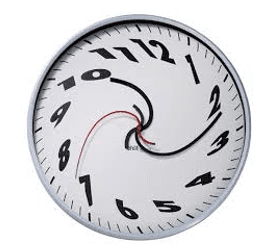
There is first, time dilation related to our experiences. Have you noticed how slow time passes when you are anxiously waiting for something, (maybe counting the days and hours until you can get your first driver’s license), or (maybe when you are in a hurry and you are stuck at a traffic light). I recall the old saying ‘a watched kettle never boils’. Of course it does, but the time drags on and on. Also remember how fast it goes when we have pleasurable experiences (ah, that first memorable kiss?) or (that time we had just wasn’t long enough) Is it over already? This is time dilation related to our experiences.
Einstein proposed in his calculations that the faster we travel the more our perception and our physiology of time slows down (time dilation related to speed). This has been shown with atomic clocks in spacecraft that when returned to earth, were then compared with atomic clocks on earth. The difference confirmed Einstein’s equations exactly. This and numerous other experiments have shown that if you had a twin and you left in a space craft at high speed and returned many years later, you would have aged less than your twin here on earth. This is time dilation related to speed. Time is relative. Your GPS would not work if the atomic clocks onboard those satellites were not constantly adjusting their clocks to conform to surface atomic clocks. Time stops at the speed of light. So a photon of light experiences no time at 186,000 miles per second, arrival is instant.
Time dilation to rock. Zero
The man cried to the Universe, “give me more time”! The Universe cried back, “there is no more time, give me more you”! Jim Roan
Multi-sourced scientific evidence indicates and supports the idea that our Universe was somehow started about 13.8 billion years ago, not
how, or why, it started, but from that instant after on, and how they know that.
Now, was the Earth created perfect
about 6,000 years ago, Kazaam, or could it be that it developed gradually through a regulated process requiring an unimaginable length of time? The answer to this has profound implications as to how we arrived in the here and now, and how we think. It will characterize our individual points of view. Hang in there! Let us try and find out. Oh my goodness.
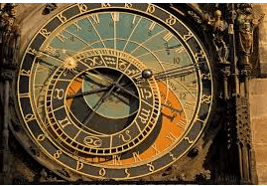
There are many methods of dating objects with different molecular structures. Dating material drawn from the archaeological record can
be made by the direct study of an artefact, or it may be deduced by association with materials found in the context the item is drawn from, or inferred by its point of discovery in the sequence.

2_CARBON DATING
No, not a dating app for seniors.
The contents of many atoms have an excess of particles and are unstable, and will decay into a lighter atom by ejecting excess particles at a known rate. This is the principle behind the Geiger counter, which will pick up and methodically record the breakdown of ‘radioactive’ heavy elements.
Living matter contains carbon 14 which is an unstable isotope and will ‘decay’ by ejecting nuclear particles at a known and precise rate. While a plant or animal is alive, it is exchanging carbon with its surroundings, so that the carbon it contains will have the same proportion of carbon 14 as its biosphere. Once it dies, it ceases to acquire carbon 14, but the carbon 14 that it contains will continue to decay, and so the proportion of radiocarbon in its remains will gradually reduce. Because carbon 14 decays at a known rate, the proportion of radiocarbon can be used to determine how long it has been since a given sample stopped exchanging carbon.
The older the sample the less carbon 14 will be left. The time it takes for it to reduce carbon 14 by half is known as its half-life. The half-life of carbon 14 is about 5,730 years. This measurable half-life is determinate and constant, producing a time-line of the carbon’s breakdown over time. This means that half of the carbon 14 is reduced each 5,730 years and will continue reducing half every consecutive 5,730 years. Of course this can be calculated to very fine percentages.
This is how carbon-dating determines the age of certain archeological artefacts of a biological origin, up to about 70,000 years old. Since the introduction of carbon dating by Willard Libby in 1949 it has been used in dating such things as bone, tissue, cloth, wool and plant fibres. It has been used to date the Dead Sea Scrolls, the Shroud of Turin and Otzi the Iceman.
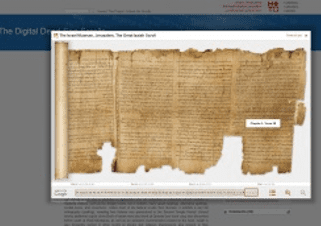
The Dead Sea Scrolls are mostly religious writings found in eleven caves, near the site of Qumran. Most of the archive consists of thousands of parchment and papyrus writings. Carbon dating them individually, shows that their ages range from the eighth century BCE to the first century of the Common Era. (CE) About 230 manuscripts are referred to as Biblical Scrolls, which are part of the Hebrew Bible. They were considered to be vessels of divine communication. Among the scrolls are scrapes including partial or complete copies of most books in the Hebrew Bible (except Esther).
Many biblical manuscripts closely resemble the ‘Masoretic Text’, (war between the apostles of light and the demons of darkness) the accepted text of the Hebrew bible from the second half of the first millennium CE until today. Remarkably, the Qumran Scrolls are over 1,000 years older.
Additions and deletions in certain texts imply that the writers felt free to modify texts they were copying.
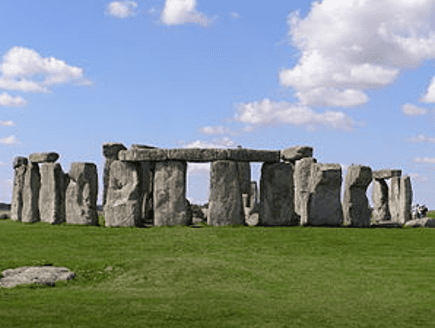
Stonehenge (near seahenge) in England is very famous. It had a double-level circle and central stone monument from which the precession of constellations could be accurately established and which corresponded precisely with the cycle of seasons. This would have been crucial in the establishment of agriculture. It just happens agriculture emerged in this time frame. Radio carbon dating of the Stonehenge monument artefacts indicate that the building of this monument started around the year 3,100 BCE and ended around 1,600 BCE. This is a construction phase spanning 1,500 years. Wood charcoals show human activity from this site dating from 7,000 BCE. (9,000 years ago).
3_DENDROCHRONOLOGY
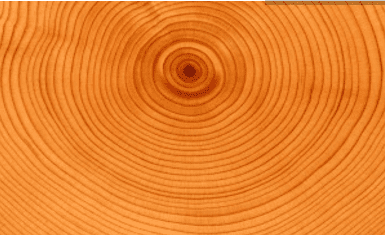
Sounds like a dental problem, No, It is Growth rings, also referred to as tree rings or annual rings, can be seen in a horizontal cross section cut through the trunk of a tree. Growth rings are the result of new growth in a layer of cells near the bark. Visible rings result from the change in growth speed through the seasons of the year, thus one ring marks the passage of one year in the life of the tree. For me, its birthdays and wrinkles.
The inner portion of a growth ring is formed early in the growing season, when growth is rapid, creating less dense wood.

This is called ‘early wood’. The outer portion of a growth ring (late wood) is denser. Adequat emoisture, and a long growing season result in a wide ring. A drought one year will result in a very narrow ring. Trees from the same region will tend to develop the same patterns of ring widths. Following these tree ring patterns from living trees back through time, chronologies can be built up, both for entire regions, and for sub regions of the world.
Thereafter, wood from ancient structures, can be matched to known tree ring chronologies producing a much longer and accurate timeline. This is called ‘cross-dating’, and the procedures can be visually understood, even though there is a lot of science involved. There is a nice ring to this.
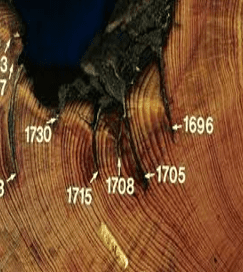
Annual rings have different properties depending on weather, water supply, rain, temperature, soil PH, plant nutrition and carbon dioxide concentrations. These variations
are used to determine past climate variations in the year and season they occurred. The evidence from this source has established when certain events happened and to what extreme they occurred, and how long they lasted. The evidence shows fires, droughts, earthquakes, volcanic eruptions, and celestial collisions. Each one identified in the exact year and season through those simple tree rings.
Professor Michael Baillie of Queens University, Belfast is a leading expert in Dendrochronology. He built a 7,400 year chronology. Baillie noticed severe environmental downturns around 2353 BCE, 1628 BCE, 1159 BCE, 208 BCE and 540 CE. The AD 540 event for example is attested to in tree ring chronologies from Siberia, Europe and North and South America and coincides with a huge ammonium signal in Greenland ice. These epochs were accompanied by written historical references of cometary apparitions.
In 1937 A. E. Douglass established the Laboratory of tree-ring research to establish the chronology of fire history, ecology, archeology, hydrology and climate change. Tree ring dating is based on the analysis of patterns of tree rings. Dendrochronology can precisely date the time when tree rings were formed, in many types of wood, to the exact calendar year.
It can be used to determine certain aspects of history such as buildings and art. This technology has been used in sync with radiocarbon dating to verify accuracy. It is possible to date wood back a few thousand or many thousands of years. Still-living, and long-dead specimens of Bristlecone pine in the white mountains of California have been used to provide a tree ring chronology going back 8,500 years. Combined with other technologies, Dendrochronology has been able to confirm anchored chronologies to a little over 11,000 years. “I think that I shall never see, a poem as lovely as a tree” Joyce Kilmer.
Another British monument Seahenge, (contemporary of Stonehenge) was constructed from tree timbers. Using a variety of scientific techniques, archaeologists have come to the conclusion that all the trees had been felled in the same year, 2049 BCE. The condition of the sapwood indicated it had been cut down in spring or early summer. The condition of the wood also showed the types of tools used to shape the timber. The presence of middle and late Bronze Age pottery in the sequence suggests that it became a focal point again several centuries after construction.
This science started when Douglass sought to better understand cycles of sunspot activity and reasoned that changes in solar activity would affect climate patterns on Earth which would subsequently be recorded by tree-ring growth patterns.
4_ICE CORE
An ice core is a core sample drilled with a hollow tube to a depth in ice and then removed for examination. Ice cores are most commonly removed from the polar ice caps of Antarctica, Greenland, or from high mountain glaciers. (Picture of US Geological Survey National Lab where many ice cores are stored and analysed)

Ice sheets are formed from an annual accumulation of snow. Lower levels are older than upper layers and an ice core contains ice formed over a range of many years. Successive snowfalls compress lower levels into distinct demarcations. Ice cores contain an abundance of information about climate during those years. Inclusions in the snow of each year such as wind-blown dust, ash, bubbles of atmospheric gas and radioactive substances remain in the ice, Could they maybe find those lost socks? This enables the reconstruction of local temperature records, precipitation, chemistry and gas composition, volcanic eruptions, solar variability, forest fires and the history of atmospheric composition. Micro- meteorites have also been found embedded in the ice. But, that’s another story.
The length of the record depends on the depth of the ice core and varies from a few years up to 800,000 years. The right site can be used to construct an uninterrupted and detailed climate record extending over hundreds of thousands of years. It is the simultaneity of these properties recorded in the ice that makes ice cores so accurate, and provide such a powerful tool in paleo-climate research. A lot of ice and a lot of history perfectly preserved in ice. And you thought ice was just good to cool your drink.
Flash. An American team penetrated 2,600 feet of ice from sub-glacial lake Whillans in Antarctica. Within hours, scientists found bacterial cells at the rate of more than 450,000 per teaspoon. Climatologist Vladimir Lipenkov retrieved the purest sample yet, from sub-glacial lake Vostok locked between thousands of feet of ice for up to 15 million years. I can’t wait for their analysis. Bring it on.
5_THERMO LUMINESCENCE
is used to date sediments and things like old ceramic wares, fired pottery, bricks and some building materials. It can provide the date of last firing. This also applies to cremations. Australia’s oldest human find, Mungo Man, was dated in this manner at about 24,700 years ago. This involves analyzing a very complicated collection of electrons in crystalline structures like quartz, feldspar, and aluminum oxide.
6_OPTICAL DATING
uses some similar procedures and is used to date minerals. Certain minerals change when heated (in excess of 400 degrees centigrade), or are exposed to sunlight. When these minerals become excited through heat they emit photons of light which are detected using a photo multiplier tube. The signal is then used to calculate the dose or exposure the material had absorbed. This procedure is also used to measure
accumulated radiation dose in the tissues of health care, nuclear, research and other support workers.
7_POTASSIUM-ARGON
Is based on measurement of the product of the radioactive decay of an isotope of potassium into argon. Potassium is a common element found in micas, clay minerals, tephra evaporates, and other materials. For example when lava or other molten materials solidify they entrap potassium that would otherwise escape. Measuring the amount of argon converted by the potassium since its entrapment is used to calculate the absolute ages of samples older than a few thousand years.
8_DNA
For millennia, the stories of long-extinct species, including our own progenitors have been buried with their skeletal remains. But in 2013, ultramodern DNA extraction and sequencing techniques enabled researchers to access ancient genetic codes and translate their evolutionary trails:
Researchers in Denmark (my ancestral genealogy) reconstructed a record breaking 700,000 year old horse genome and geneticists in Germany began parsing the DNA of 400,000 year old hominoids. Using what is called true single molecule sequencing,
Danish geneticist Ludovic Orlando assembled the ancient horse genome six times older than any nuclear DNA specimen ever sequenced. The results radically revise the timeline for equine evolution to origins at least 4 million years ago.
Stay tuned for further developments. Using hair samples from several different mammoths discovered in Siberian permafrost, scientists have extracted many separate fragments of mammoth DNA.
Mammoth DNA from 30,000 years ago differs from elephant DNA by less than 1%. Serious scientific efforts are under way to clone ancient mammoth DNA into a living breathing Mammoth. Ancient Mammoth DNA has been found and extracted for cloning. After an extensive search, a team of scientists has found a suitable egg-doner and separate surrogate mother that meets their strict scientific requirements. This has the possibility of recreating a creature that walked and breathed and survived tens of thousands of years ago and went extinct. WOW!
9_OTHER METHODS
There are more ways of dating such as archaeomagnetic dating, amino acid dating, and geochemical dating. There are a lot of ways to tell how old something is. There is a plethora of dating technologies producing evidence that confirm and overlap each other with penetrating clarity. If only we could derive this kind of clarity from mythological musings and the written speculations of humans. This is not possible, and I am happy to explain why as you read on.
10_EARTH AGE
Earth’s age proved difficult to determine. I want to spend some time presenting an overview of this, in order to establish how this was arrived at. Don’t change the channel.
A French scholar, Bernard Palissy believed the Earth was much older than 6,000 years based on his observations that rain, wind, and tides were the cause for much of the present day appearance of the Earth. He wrote that these forces could not work over such a short period of time to produce the results observed. He was burned at the stake in 1589.
In the 1790’s,William Smith, as one of the first naturalists to appreciate the connection between fossil remains and strata, he hypothesised that if two layers of rock at widely differing locations contained similar fossils, then it was very plausible that the layers were of the same age. This led to a calculation by such means that Earth was about 96 million years old.
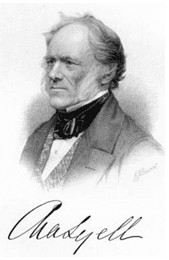
In mid 1800’s Geologist Sir Charles Lyell presented the view that all features of the Earth’s surface are produced by physical, chemical and biological processes through long periods of geological time. In the mid-18th century, the naturalist Mikhail Lomonosov produced papers speculating that Earth had been created separately from the rest of the Universe, several hundred thousand years ago.

In 1779 Comte du Buffon created a small globe that resembled Earth in composition and then measured its rate of cooling. This led him to estimate that Earth was about 75,000 years old.
In 1830 geologist Charles Lyell popularized the concept that the features of the Earth were in perpetual change, eroding and reforming continuously. This was a challenge to the traditional view, which saw the history of Earth as static. He compared the amount of evolutionary time of marine mollusks and estimated the Cenozoic Era alone, at 80 million years.
In 1862 the physicist William Thomson (Lord Kelvin) published calculations that fixed the age of the Earth at between 20 million and 40 million years. He assumed that Earth had formed as a completely molten object. He determined the amount of time it would take for the near surface to cool to its present temperature. His calculations did not account for heat produced via radioactive decay (a process then unknown to science) or convection inside the Earth which allows more heat to escape from the interior to warm rocks near the surface. Geologists had trouble accepting such a short age for Earth. 100 million years seemed too short to be plausible.
Charles Darwin’s theory of evolution of organisms by natural selection and the rate of genetic divergence implied great expanses of time were required. Darwin was of religious faith and went through great pains to try to reconcile evolution with his faith and was vilified by theologians for his conclusions.
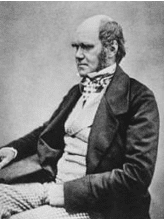
In 1869 Thomas Huxley attacked Thomson’s calculations suggesting they were based on faulty assumptions and could not be long enough to account for the events of the past.
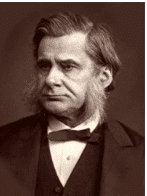
In 1892 Simon Newcombe calculated the amount of time it would take for the Sun to condense down to its current diameter and brightness. However they assumed that the Sun was only glowing from the heat of its gravitational contraction. The process of solar nuclear fusion was not yet known to science.
In 1899 John Joly calculated the rate at which the oceans should have accumulated salt from erosion processes, and determined that the oceans were about 80 to 100 million years old.
In 1895 John Perry produced an age of Earth estimate of 2 to 3 billion years old using a model of a convective mantle and thin crust.
Then In 1898 Marie and Pierre Curie discovered the radioactive elements polonium and radium and in 1903 announced that radium produces enough heat to melt its own weight in ice in less than one hour. They both died from radiation poisoning.
Geologists quickly realized that the discovery of radioactivity upset the assumptions on which most calculations of the age of Earth were based. These calculations assumed that the Earth and Sun had formed sometime in the past and been steadily cooling since that time. They had previously not known how radioactivity provided a process that generates enormous heat. Radioactivity, which had overthrown the old calculations, yielded a bonus by providing a basis for new calculations.

Rock minerals naturally contain certain elements, and not others. By the process of radioactive decay occurring in rocks, exotic elements are introduced over time. Typical radioactive end products are argon from potassium 40, and lead from Uranium decay. Thus the age of the oldest terrestrial rock gives a minimum for the age of the Earth assuming that a rock cannot have been in existence for longer than the Earth itself.
Ernest Rutherford concluded that radioactivity was due to a spontaneous transmutation of atomic elements. In radioactive decay, an element breaks down into another, lighter element, releasing alpha, beta or gamma radiation in the process. He also determined that a particular isotope of a radioactive element decays into another element at a distinctive rate. This rate is given in terms of a ‘half life’, or the amount of time it takes half of a mass of radioactive material to break down into its ‘decay product’.
Some radioactive materials have short half lives; Uranium and Thorium have long half-lives, and so persist in Earth’s crust. This suggested that it might be possible to measure the age of Earth by determining the relative proportions of radioactive materials in geological samples. In 1904 Rutherford took the first step toward radiometric dating by suggesting that the particles released by radioactive decay would be trapped in a rocky material as helium atoms. Four years later he proved the relationship. Sir William Ramsey had just calculated the rate at which radium decays into helium. Rutherford then combining the rate of decay, with the percentage of helium in the sample, dated a rock in his possession to an age of 40 million years.
Many contemporary scientists refined the process and used this procedure to date rocks from 250 million to 1.6 billion years. In the 1930’s other research was published establishing the rules for radioactive decay, allowing precise identification for numerous other decay rates for other elements.
In 1931 the National Research Council of the US decided to resolve the question of the age of the Earth by appointing a committee to investigate. The report concluded that radioactive dating was the most reliable means of pinning down geological time scales and continues to be the predominant way scientists date geological timescales. Forty or so different radioactive dating techniques have been utilized to date, working on a wide variety of samples.
11_METEORITES
Some geological samples from Earth have undergone a long history of mixing and un-mixing of the sample reservoirs by molten conditions, plate tectonics, weathering and hydrothermal circulation. Some
samples from Earth could not give direct evidence of the formation of Earth because these samples had been altered from their state at Earth’s formation by Earth’s early molten state.
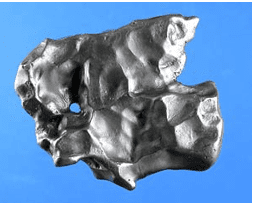
It was soon realized that meteorites represent the primitive material from which the solar disc was formed and therefore would be the same age as the Earth. In 1956 C. C. Patterson used uranium-to-lead isotopes to date several meteorites. The famous Canyon Diablo meteorite shows a spread from 4.53 to 4.58 billion years ago. The 50 million year time difference allows for accretion of the planets from the original solar disc. Hundreds of other samples have confirmed these dates. Also, rocks returned from the Moon have been dated at a maximum of 4.4 and 4.5 billion years old. (The Moon formed after the Earth as a result of a collision between the young earth and another planetary body called Thea.)
In Earth’s early formative stages, Earth was continually peppered with meteorites and comets bringing ice water and replenishing the heavy metals which had sunk to the Earth’s core during its molten stage. Martian meteorites that have landed on earth have also been dated to 4.5 billion years old by lead-lead dating. Since Lunar samples have not been disturbed by weathering, plate tectonics or material moved by organisms, they can also provide dating by direct electron microscope examination of cosmic ray tracts. The radiometric date of meteorites can be verified with studies of the Sun. The Sun can be dated using helio-seismic methods which strongly agree with the radiometric dates found for the oldest meteorites. The age of the earth is 4.567 billion years, plus or minus 0.05 billion years. Wow. Suppose you or I would be lucky to live to 100 years. Whoa. What’s for dinner?
12_ZIRCON DATING
Among the oldest rocks on earth is a mineral named zircon. Originally formed by crystallization from magma or in metamorphic rocks, Zircons are so durable and resistant to chemical attack that they can survive many geological events, which can be recorded in rings of additional zircon that grow around the original crystal, like tree rings. Like a tiny time capsule, the zircon records these events, each one of which may last hundreds of millions of years.
Meanwhile the core of the zircon remains unchanged, and preserves the chemical characteristics of the rock in which it originally crystallized.
Zircon contains uranium appropriately called, ‘the clock within the zircon’ because it converts to the element lead at a specific rate over a long span of time. According to Dr. Mueller, this makes zircons ‘the most reliable natural chronometer that we have when we want to look at the earliest part of Earth’s history’. See the full story for yourself on the internet. The oldest dated zircons date from 4,400 million years ago.
13_GEOLOGICAL RECORD
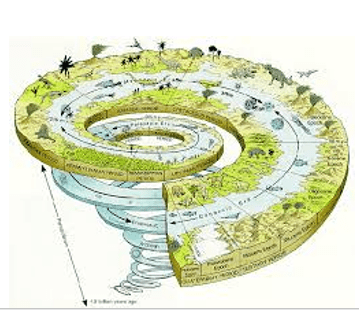
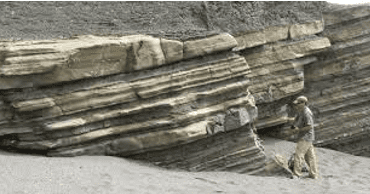
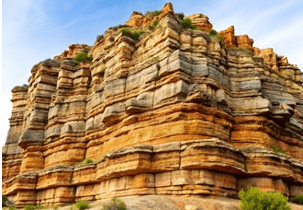
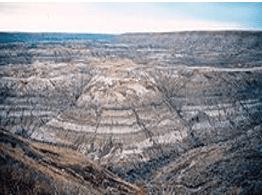
The geological history of earth follows the major events in Earth’s past based on the geological time scale by the chronological study of the planet’s rock layers (stratagraphy). The geological record refers to the layers of rock (strata) deposits laid down in volcanism or by sediment deposition, (much like a layer cake) including all of its fossil content and the information it yields about the history of the Earth: its past climate, geography, geology and the evolution of life on its surface. Rock layers are deposited on top of each other. They harden over time to become a solidified rock column.
14_ROCK COLUMN
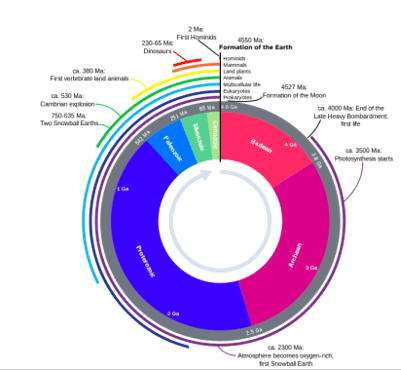
At certain locations on the Earth’s surface, the rock column provides a cross section of the natural history in the area during the time covered by the
age of the rocks (rock history). Not the ‘Rolling Stones’. This rock history gives a window into the natural history of the locations that spans many geological time units such as ages, epochs, or in some cases even multiple major geological periods.
15_SEDIMENTS
Sediment core data at the mouths of large river drainage basins go as deep as 7 miles. By comparing overall formations, geological structures and local strata, calibrated by those layers which are widespread, a nearly complete geological record has been constructed of certain river basins since the 17th century. Other much older time periods have come together with amazing clarity. Fossils can be used to recognize rock layers of the same or different geological ages, thereby coordinating locally occurring geological stages to the overall geologic timeline. Fossils are one form of discordancy which geologists use to compensate for local variations in the rock record which can then be calibrated into the overall geologic record.
Well stratified and fully exposed Dinosaur Park formations in Alberta, Canada and like formations extend for over 1,000 miles exposing eons of rock history through numerous strata layers, which in the Colorado Plateau are miles thick. Upper Jurassic cyclic sediments near Bern Switzerland show limestone and clay layers during a 200,000 year cycle within a single era.
16_GEOLOGIC EVIDENCE
Earth formed circa 4.567 billion years ago by accretion from our solar nebula at the same time as the other planets and planetary and interplanetary debris. Earth was initially molten due to extreme volcanism and frequent collisions with other bodies. Eventually, the outer layer of the planet cooled to form a crust when water began to accumulate in the atmosphere. Out gassing, and volcanic activity produced the primordial atmosphere. Condensing water vapour, augmented by ice delivered from comets, produced the oceans.
As the surface continually reshaped itself over hundreds of millions of years, continents formed and broke apart. About 750 million years ago landmasses combined to form a super continent. Eventually, 180 million years ago, after breakups and regroupings the supercontinent Pangea broke apart.
Polar regions have undergone repeated cycles of glaciation and thaw, repeating every 40,000 to 100,000 years. Ice ages have patterns to them that include long stretches with and without. The present pattern of ice ages began about 40 million years ago, and then intensified. The last glacial period of the current ice age ended about 10,000 years ago.
The Precambrian Period includes about 90% of geologic time from 4.54 billion years ago to the Cambrian Period.
I conclude from my research, that our dearly precious and marvelous Earth had its beginnings from the simplest of processes. The natural force of gravity combined with the natural force of nuclear fusion created the perfect circumstances for all matter to be formed. These forces worked over immense periods of time, (from our perspective) to produce the abundance of elements and their combined forms that exist all around us today. Our beautiful blue planet had tumultuous beginnings approximately 4.567 Billion Earth years ago when it accreted from the mass of rocks and debris circling our newborn Sun.
17_UNIVERSE AGE
Determining the age of our Universe, has been calculated by temperature measurements and how far things are apart. Distance equals time because it takes time to travel a distance.
For example: The speed of light in a vacuum has been measured to be 186,000 miles per second or 300,000 kilometers per second. Actually Wikipedia says,exactly 299,792,458 kilometers per second. The length of the meter is defined from this constant. We know that light can travel around the earth several times in one second because it travels 671 million miles per second. According to Einstein’s Relativity, this is the fastest speed that energy, matter or information can travel in the Universe. Hot Rod Lincoln. That is fast. 1 light year is about 1 trillion miles.
The speed of light has been confirmed by numerous scientists conducting countless experiments. One way, is to bounce a laser off a celestial body of distance calculated by trigonometry, a known distance, (moon, planet) and measure the time it takes to return by atomic clocks. This time divided by the distance equals the speed of light.

The speed of light has been confirmed by numerous scientists conducting countless experiments. One way, is to bounce a laser off a celestial body of distance calculated by trigonometry, a known distance, (moon, planet) and measure the time it takes to return by atomic clocks. This time divided by the distance equals the speed of light.
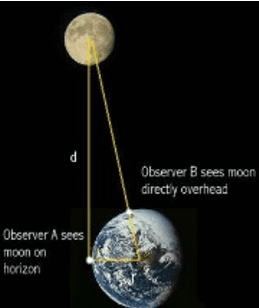
By using trigonometry we can calculate that the moon is on average 382,000 kilometers from earth or 764,000 kilometers return trip. We know that reflected light from the moon takes a little over two seconds to return to us. When we look at the moon, we are actually looking a little over a second into the past, since that is how long it took for the light to reach us one way.
Astronomers had to work out the actual distance to just one planet, to find the distances from the sun for all the rest of the planets. A radio wave (electrical) is bounced off Venus, Mercury or Mars and precisely timed. This amount of time, times the speed of light, gives a return trip distance divided by two, for a one-way distance. When one length and two angles to a triangle are confirmed, the other two lengths and one angle become apparent and further distances can then be calculated. Basic trigonometry.
The distance between the Earth and the Sun is about 93,000,000 miles. This is called 1 astronomical unit, or (AU). It takes about 8 minutes and 17 seconds for that light to reach us and we see the sun as it was about 8 minutes in the past. It is not exactly where we visually see it but where it was 8 minutes ago. Which way did it go go?
We know that the light from the planet Neptune has a journey of 4 hours to reach us. The planet Neptune that an astronomer sees in his telescope is actually not there anymore but where it was 4 hours ago, in the past. Light is a time machine to the past.
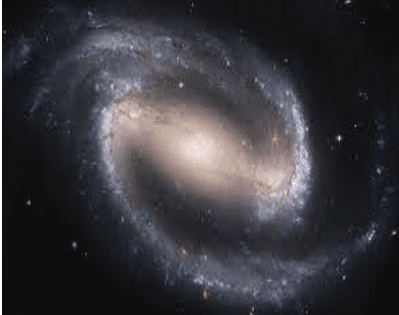
Our nearest neighbourhood star is Proxima Centauri and it takes 4 years for its light to reach us at the speed of light. That is trillions of miles. A distance hard to imagine, but it’s nlike rubbing shoulders compared to other stellar objects.
It was 6,500 years ago when light left the remnant of an exploded star called the crab nebula. This star exploded 6,500 years ago and we see it now. So, this visual evidence shows us that 6,500 years ago that little piece of the universe existed. This is one way that age is calculated. Light is like a time-machine, taking us into the past.
Evidence shows that light from the far distant stars and galaxies has taken millions, even billions of our years to reach us. When Edwin Hubbell looked at the distant galaxies through his telescope he measured the red shift of those galaxies and they all appeared to be moving away from each other at enormous speeds, confirming the concept of an expanding Universe. Red shift is much like the Doppler Effect where you hear a siren coming toward you at a high pitch and it drops to a lower pitch after it has passed you. The siren sound is compressed as it approaches and expanded as it recedes.
In this case, light is shifted to the red end of the spectrum when the light is moving away and to the blue end when approaching. Imagine marking a balloon with dots all over it to represent galaxies. Now blow the balloon up and you can visualize how all the galaxies are expanding outward and away from each other. Try it.
18_MICROWAVE TEMPS
Throughout the Universe measurements are made by the Wilkinson Microwave Anisotrophy Probe (WMAP). This probe was launched by NASA in 2001 from Cape Canaveral and operated successfully for nine years. The WMAP objective is to measure the temperature differences in the Cosmic Microwave Background across the whole sky. It takes six months to complete one scan. These data are used to measure the Universe’s geometry, content, and evolution and to test the Big Bang model and cosmic inflation theory. It has taken the temperature of 50 million tiny patches of sky.
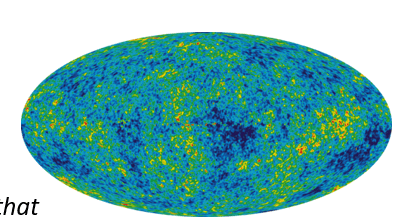
The Planck telescope observes microwaves that date back to just 380,000 years after the Universe was created. This was when the Universe had cooled enough for stable atoms of hydrogen to form. And microwave light could escape. These microwaves are called the cosmic microwave background.
As a result, WMAP was able to produce a full sky map of the Cosmos with a 13 arc-minute resolution via multi-frequency observation containing 3,145,728 pixels. I assume that to mean, pretty detailed. This is some space based telescope. Not your average pair of goggles. The latest calculated age and composition of the early Universe were presented with an image containing stunning details.
Evidence showed that it took nearly half a billion years for the first stars to form. Data has finally been released and images show 13.772 billion year old temperature variations among other amazing discoveries. Wow. New missions are in the works.
Media and the science community accolade this enormous achievement with headlines like: “all the arguments of the last few decades about the basic properties of the Universe – its age, its expansion rate, its density, have been settled in one fell swoop”. WMAP is the instrument that finally allowed scientists to hear the celestial music and figure out what sort of instrument our Cosmos is. Feel the rhythm.
19_SPECTROSCOPY
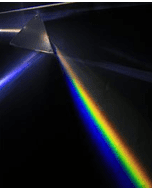
Spectroscopy is the measurement of radiation intensity, or spectra. There are many types of radiation, such as microwave, terahertz, infrared, visible, x-ray, gamma electromagnetic and others and therefore many types of spectroscopy. Because the atoms and molecules of each element have a unique spectra, these spectra can be used to detect, identify and quantify information about atoms and molecules. For our purposes here, the measured spectra of visible light waves are used to determine the chemical composition of elements, and physical properties of astronomical objects, such as their temperature, density, mass, distance, luminosity and velocity. We can actually find out what Stars are made of by the composition of their light.
In the early 1800’s Joseph Fraunhofer combined telescope and prism to observe the absorption line spectrums of Venus, Mars, the Moon and various stars such as Betelgeuse. Improvements in the 1850’s, allowed scientists to compare the absorption lines of the Sun with the emission spectra of known gases. Using this method the chemical composition of stars can be determined. In 1869 astronomers using spectroscopy discovered a new element in the sun’s corona and named it Coronium.
By analyzing the width of each spectral line, both the elements present in a star and their relative abundance can be determined.

20_AGE OF UNIVERSE
The age of the universe can be determined by measuring the Hubble constant today and extrapolating back in time with the observed value of density parameters. Before the discovery of dark energy, it was believed that the universe was matter-dominated, and so Ω on this graph corresponds to Ω. Scientists have a unique capability to understand the physics of the Universe. The actual distance is (4.354 plus or minus 0.037) x 10 to the 17 seconds. or (13.798 plus or minus 0.037) x 10 to the ninth power in years.
Translation:
Because it is difficult for us ordinary people to understand this kind of language, I conclude from the abundance of scientific evidence, which is as a product of my search, that the age of our well defined Universe since its creation event is 13.798 Billion years of age, plus or minus 0.037 Billion years, from our perspective of what a year is. Charlie. Anti-kazaam.
Next up -How the heck did life get here?

Have a happy day. and don’t forget to have some fun